

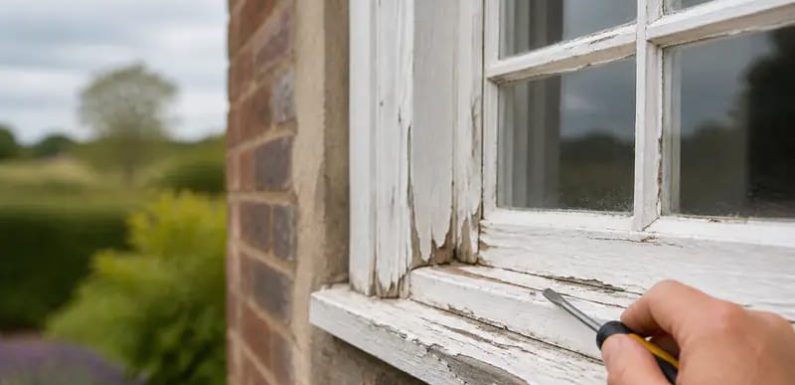
Here is how to start spotting rot in Sash Windows.
Old timber in windows is very prone to decay in Norfolk’s wet winters and Norfolk’s salty sea air. There’s often a lot of hidden rot before it starts to fall apart from the inside out. It doesn’t take long to investigate with a torch and screwdriver.
Start With The Sill
Because the sill is horizontal, water tends to collect on it. Crackng, a dull grey colour or even paint pulling away from the wood are signs of trouble on the sill, particularly if it’s been wet for a number of years.
Probe The Bottom Rail And Joints
Don’t rely on just a visual check for signs of decay. Push a screwdriver into the bottom of the bottom rail and into the corner joints between the frame and the sill of the window. Sound timber will resist but soft rotten timber will give way easily. If the screwdriver sinks into the timber with little pressure applied, this indicates rot.
Check The Horns For Softness
End grain is far more prone to decay than the face of a piece of timber, so test the Horns by pressing against the edge of them. If they feel soft then even if they appear to be OK, it is likely that they will need to be replaced.
Read What The Paint Is Telling You
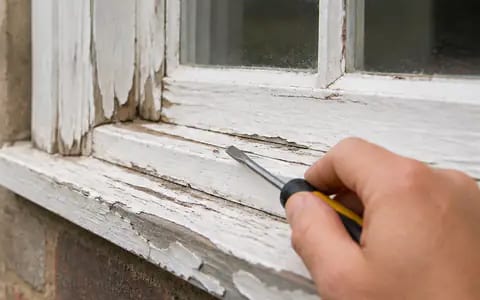
When paint starts to peel or bulge up it is often hiding decay in the wood beneath. Typically you will see bubbling or even fine cracking. The frame may even look swollen but uneven. The really important point to note about painting sash windows is that most are repainted every few years. Therefore, provided the paint is of a good quality, i.e. breathable, then the worst that will happen is that the timber decay will be hidden rather than prevented. Historic Environment Scotland provides useful information on traditional windows.
Tell Wet Rot From Dry Rot
Wet rot will stay in the damp area where the moisture has entered, remaining damp and dark in appearance and feeling crumbly to the touch. Dry rot, on the other hand, will continue to decay even when the timber has dried out, often spreading beyond the area where the moisture entered it. Fine cotton-like strands will be visible and there may be a musty smell.
When It’s More Than A Patch Repair
Even a relatively small area of soft timber will typically need to be cut out and replaced as a new piece of timber and joined to the remaining sound areas. However, if the rot has spread through a number of joints or a sash appears to be flexing when pressure is applied in a number of areas then, for sash window repair Norfolk, it may be necessary to completely rebuild the sash or frames rather than attempt to simply patch repair them.
It’s best to catch decay before it becomes a problem and cost to repair. Local decay can often be easily cut out and reinforced with new timber before it’s develops into a larger problem.
