

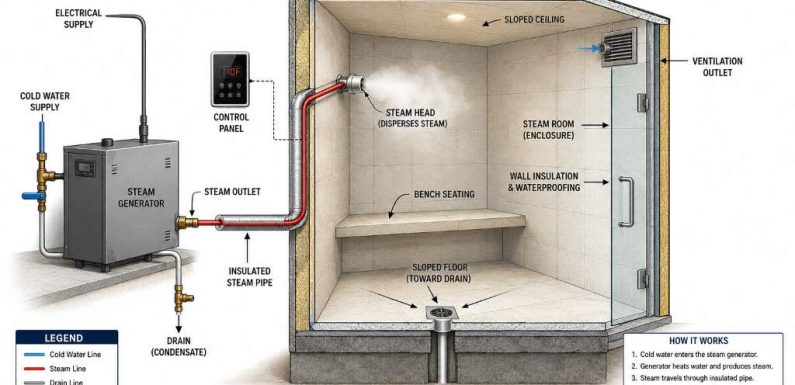
A steam bath diagram shows how every component connects to create a safe and effective steam room. It typically includes the steam generator, steam line, steam head, control panel, water supply, drain, seating, ventilation, and insulated steam enclosure.
Understanding the layout before installation reduces costly mistakes and improves system performance. According to industry studies, steam rooms typically operate between 110°F and 120°F with nearly 100% humidity, making proper design essential for comfort and safety.
What Is a Steam Bath Diagram?
A steam bath diagram is a visual representation of every major part inside a steam room system. It explains how water travels through the equipment before becoming therapeutic steam.
Most diagrams include plumbing lines, electrical connections, insulation, seating positions, and ventilation paths. Additionally, understanding related plumbing concepts becomes easier after reading wye fittings versatile applications because drainage design directly affects steam room performance.
The diagram also helps homeowners, contractors, and designers follow proper installation practices. Consequently, the finished steam room works more efficiently and lasts much longer.
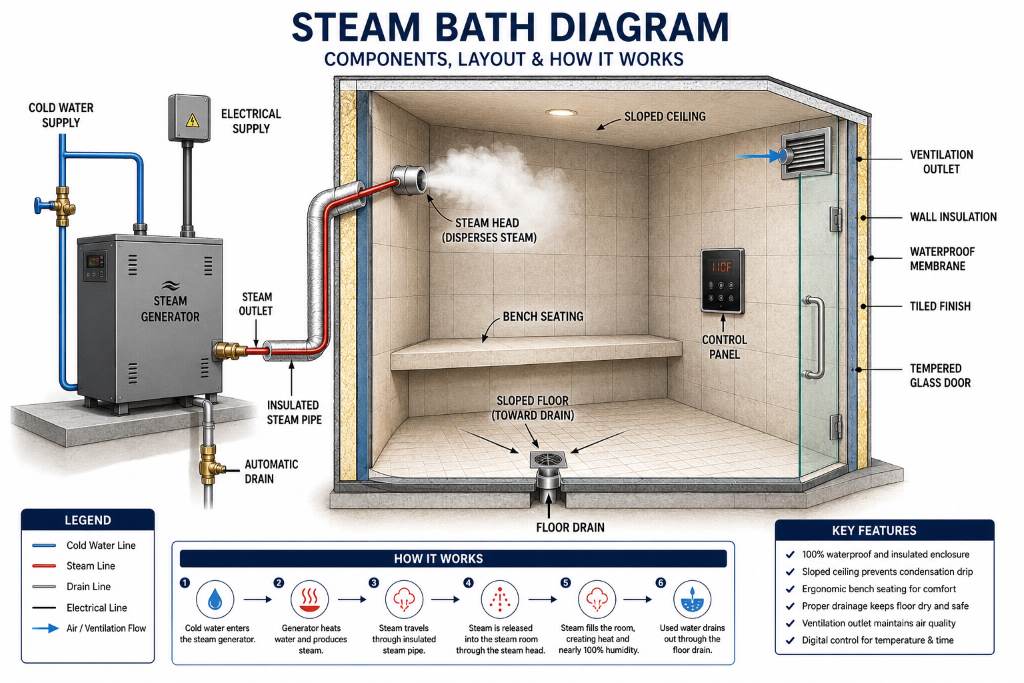
Basic Steam Bath Diagram Explained
A standard steam bath diagram contains several connected components working together. Each part performs a specific task within the complete system.
- Steam generator
- Cold water supply
- Power connection
- Steam delivery pipe
- Steam head
- Digital control panel
- Steam room enclosure
- Ceiling with slight slope
- Insulated walls
- Waterproof floor
- Drain system
- Ventilation outlet
- Built in seating
Every component must remain correctly positioned for maximum efficiency. Otherwise, heat loss and moisture damage may reduce the system’s lifespan.
Main Components of a Steam Bath Diagram
Steam Generator
The steam generator heats water until it produces clean steam. It usually sits outside the steam room inside a nearby utility space.
The generator connects to electricity, water, and the steam pipe. Furthermore, many homeowners planning luxury renovations also explore design a custom bathroom to create a complete spa experience.
Steam Pipe
The insulated steam pipe carries hot steam directly into the enclosure. Proper insulation minimizes heat loss during transportation.
The pipe should remain as short as possible whenever practical. Therefore, installers normally place the generator close to the steam room.
Steam Head
The steam head safely releases steam into the room through specially designed openings. Manufacturers recommend placing it away from seating areas.
This placement prevents direct contact with extremely hot steam. As a result, users enjoy greater comfort and improved safety.
Control Panel
The control panel allows users to manage temperature, session length, and lighting. Many modern systems also include smartphone connectivity.
Digital controls improve convenience and maintain consistent temperatures throughout each session. Consequently, users receive predictable steam experiences every time.
Steam Room Enclosure
The enclosure traps heat and moisture inside the room. Waterproof construction materials protect surrounding walls from moisture damage.
Glass doors, tiled walls, and insulated ceilings appear in many residential installations. Together, these materials improve efficiency and durability.
How a Steam Bath System Works
The process begins when fresh water enters the steam generator. Heating elements rapidly boil the water inside the sealed tank.
The generated steam travels through insulated piping toward the steam head. Meanwhile, the digital controller monitors temperature throughout the session.
Steam fills the enclosed room until the desired humidity reaches nearly one hundred percent. Additionally, waterproof flooring remains important, and homeowners often review install vinyl plank flooring options when planning nearby bathroom renovations.
Once the session finishes, the generator automatically stops producing steam. Some advanced models also flush minerals from the tank after use.
Simple Steam Bath Diagram Layout
The following layout represents a simplified residential steam bath arrangement. Although designs vary, the overall flow remains very similar.
Cold Water Supply
        │
        ▼
Steam Generator
        │
Insulated Steam Pipe
        │
        ▼
Steam Head
        │
Steam Room
 ┌─────────────────────┐
 │ Sloped Ceiling      │
 │ Bench Seating       │
 │ Steam Distribution  │
 │ Floor Drain         │
 └─────────────────────┘
        │
Control Panel
Ideal Steam Room Design Features
Good diagrams include construction details instead of only equipment locations. These details improve efficiency and user comfort.
- Fully waterproof walls
- High quality insulation
- Slightly sloped ceiling
- Comfortable bench seating
- Slip resistant flooring
- Proper drainage system
- Safe electrical installation
- Accessible maintenance area
Each feature supports long term reliability while reducing maintenance requirements. Therefore, careful planning saves money over many years.
Common Steam Bath Diagram Mistakes
Incorrect layouts often reduce heating efficiency and increase maintenance costs. Fortunately, most problems are easy to prevent during planning.
- Installing the steam head beside seating
- Using poorly insulated steam pipes
- Ignoring ceiling slope requirements
- Placing the generator too far away
- Skipping waterproof wall construction
- Poor drainage planning
- Incorrect ventilation placement
- Using undersized generators
A detailed diagram helps identify these mistakes before installation begins. Consequently, builders avoid unnecessary repairs and expensive modifications.
Residential Versus Commercial Steam Bath Diagrams
Residential systems generally contain fewer components than commercial installations. Home units usually serve one family at a time.
Commercial facilities require larger generators, additional controls, stronger ventilation, and multiple steam outlets. Therefore, their diagrams become significantly more detailed.
Maintenance access also receives greater attention in commercial designs. This approach simplifies servicing while minimizing business downtime.
Benefits of Understanding a Steam Bath Diagram
Learning the diagram helps homeowners communicate effectively with installers. Better communication often produces better construction results.
- Improves installation accuracy
- Reduces future maintenance issues
- Supports better equipment selection
- Increases energy efficiency
- Enhances user safety
- Simplifies troubleshooting
- Protects surrounding building materials
Even basic diagram knowledge creates greater confidence during remodeling projects. Additionally, it helps buyers compare different steam systems more effectively.
Conclusion
A steam bath diagram serves as the blueprint for a safe, comfortable, and efficient steam room. It explains how every component connects while preventing installation errors and performance problems.
Review the complete diagram before purchasing equipment or beginning construction. Doing so ensures better results, lower maintenance costs, and years of reliable steam bathing enjoyment.
Frequently Asked Questions
What does a steam bath diagram show?
It shows the complete layout of the steam generator, piping, controls, enclosure, drainage, and ventilation.
Where should the steam generator be installed?
The generator should be installed outside the steam room in a nearby dry utility area.
Why is the ceiling sloped in a steam room?
A sloped ceiling prevents hot condensation from dripping directly onto occupants.
Can I install a steam bath without a diagram?
Using a detailed diagram is strongly recommended because it reduces installation mistakes and improves safety.
What is the most important component in a steam bath system?
The steam generator is the primary component because it produces the steam used throughout the system.
