

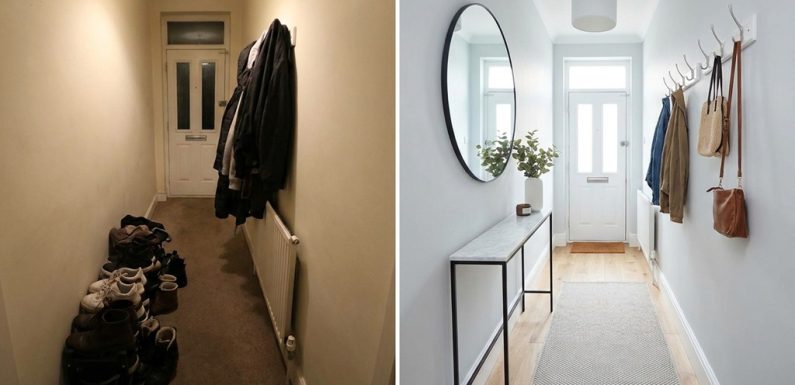
An entryway makeover can dramatically improve functionality, storage, lighting, and first impressions—often without structural renovation—by using paint, mirrors, storage solutions, and layout optimization.
Why do entryway makeovers transform a home’s first impression so quickly?
The entryway is the first space people see when they enter a home—and one of the most neglected. A cluttered hallway with poor lighting, no storage, and blank walls creates friction every day. Shoes pile up. Bags disappear. Guests get the wrong impression before reaching the living room.
An entryway makeover is the process of redesigning a hallway using layout improvements, lighting upgrades, storage solutions, and decorative elements to increase usability and visual appeal without major renovation.
Because most entryways are small, even minor upgrades create dramatic before-and-after transformations. A mirror can double perceived space. A slim console can eliminate clutter. A new paint color can redefine the entire tone of the home. These changes improve organization, resale perception, and daily routines simultaneously.
This guide explores five real-world hallway transformation strategies that combine interior design principles, storage efficiency, lighting science, and space planning to deliver high-impact entryway upgrades.
What makes a hallway makeover look dramatically different before and after?
The biggest visual transformations happen when lighting improves, clutter disappears, storage becomes intentional, and walls gain focal points like mirrors or artwork.
Most entryways fail for predictable reasons:
- Poor lighting creates shadows
- No designated storage zones
- Narrow walkways feel cramped
- Walls remain visually empty
- Shoes accumulate near doors
Interior designers often prioritize entryways because they influence perceived home quality. According to housing psychology research cited in real estate staging studies, buyers form impressions within the first 7–10 seconds of entering a home.
Key elements that create dramatic transformations include:
- Vertical storage systems
- Neutral wall palettes
- Reflective surfaces
- Layered lighting
- Multi-functional furniture
Even renters can apply most of these upgrades without permanent structural changes.
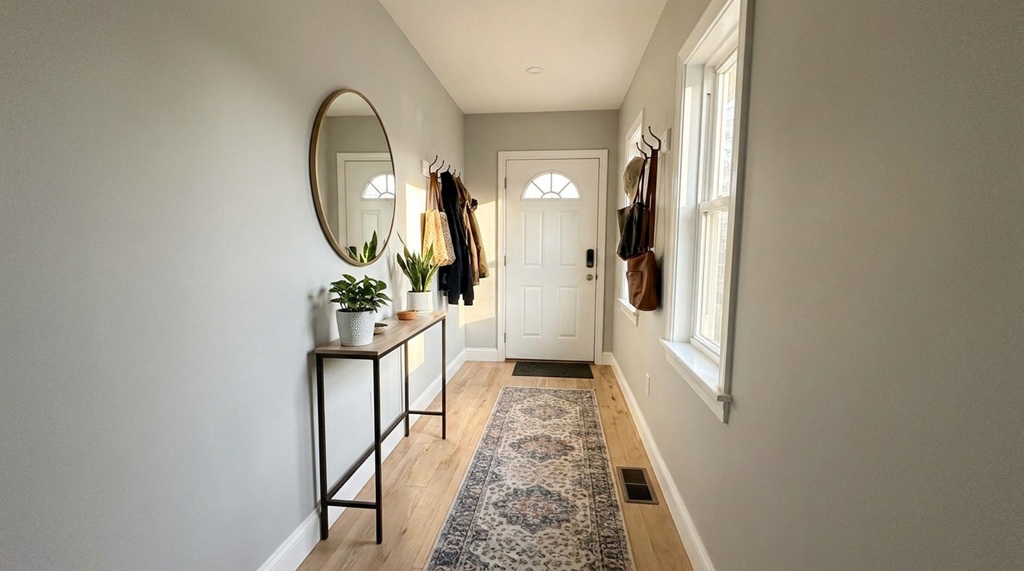
How did makeover #1 transform a cluttered shoe corridor into an organized storage entryway?
This transformation replaced floor clutter with vertical storage benches, wall hooks, and concealed shoe cabinets to create structure without widening the hallway.
Before the makeover:
- Shoes blocked walking space
- No landing surface for keys
- Bags hung randomly on door handles
- Lighting emphasized clutter
After the makeover:
- Closed shoe cabinet reduced visual noise
- Wall-mounted hooks created a drop zone
- Storage bench added seating
- Warm LED lighting improved comfort
Storage benches are particularly effective in narrow hallways because they combine seating with concealed storage. Slim cabinets less than 25 cm deep can hold 8–12 pairs of shoes without reducing walkway width.
This type of entryway organization improves daily efficiency by reducing exit-time friction in busy households.
How did makeover #2 make a dark hallway feel twice as large without removing walls?
Adding mirrors, layered lighting, and a lighter paint palette increased perceived width and brightness without structural remodeling.
Dark entryways often lack natural light due to their position between rooms. Designers solve this problem using reflection and contrast.
Changes included:
- Large vertical mirror opposite doorway
- Wall sconces replacing single ceiling bulb
- Soft neutral wall color
- Gloss-finish console surface
Mirrors expand perceived square footage by reflecting light sources. In narrow hallways, placing mirrors across from lighting fixtures increases brightness by up to 40% visually.
Layered lighting also improves depth perception. Instead of relying on one overhead fixture, combining wall lighting and accent lighting produces a welcoming gradient effect.
How did makeover #3 turn an empty hallway into a functional drop zone for busy families?
Installing labeled storage zones for shoes, backpacks, coats, and keys transformed unused wall space into a high-efficiency household command center.
Families often struggle with hallway clutter because entryways lack defined storage roles.
This transformation included:
- Individual wall hooks for each family member
- Floating shelf mail organizer
- Charging drawer station
- Basket storage under bench
Creating zones prevents clutter migration. Instead of random placement, each item has a designated landing spot.
Interior workflow studies show that homes with designated entryway storage reduce lost-item search time significantly during morning routines.
Adding vertical organization also improves accessibility for children, encouraging independent cleanup habits.
How did makeover #4 convert a narrow rental entryway into a stylish designer hallway?
Temporary upgrades like peel-and-stick wallpaper, removable lighting fixtures, and slim furniture created a luxury look without permanent installation.
Renters often assume entryway upgrades require structural changes. In reality, reversible improvements deliver strong visual results.
Key rental-friendly upgrades included:
- Peel-and-stick geometric wallpaper
- Adhesive LED strip lighting
- Freestanding mirror
- Minimalist console table
Wallpaper creates instant visual identity. Even a single accent wall changes hallway character.
Freestanding mirrors also serve multiple functions:
- Outfit checking
- Light reflection
- Vertical balance
- Space illusion
Because these changes require no drilling, they work in apartments and leased homes.
How did makeover #5 transform a builder-grade hallway into a premium-looking entrance space?
Adding architectural trim, layered textures, and statement lighting elevated a plain corridor into a high-end entryway focal point.
Builder-grade entryways often lack character. They rely on flat walls and basic fixtures.
This transformation included:
- Board-and-batten wall treatment
- Statement pendant lighting
- Textured runner rug
- Matte black hardware accents
Architectural wall detailing increases perceived property value because it introduces depth and craftsmanship cues associated with upscale interiors.
Even inexpensive trim molding can dramatically upgrade hallway aesthetics when painted consistently with wall color.
Which entryway makeover upgrades create the biggest visual impact for the lowest cost?
Lighting upgrades, mirrors, paint changes, and vertical storage produce the highest transformation value relative to cost.
| Upgrade | Cost Range | Visual Impact | Difficulty Level |
|---|---|---|---|
| Wall mirror | Low | High | Easy |
| Paint refresh | Low | High | Easy |
| Storage bench | Medium | High | Easy |
| Wall panel trim | Medium | Very High | Moderate |
| Layered lighting | Medium | Very High | Moderate |
Most homeowners achieve dramatic entryway improvements without structural renovation by combining two or three of these upgrades.
What colors work best for hallway before-and-after transformations?
Light neutral tones such as warm white, soft beige, greige, and pale gray improve brightness and perceived width in narrow entryways.
Color psychology influences hallway perception because entryways typically receive limited daylight.
Best-performing hallway color categories include:
- Warm whites for brightness
- Soft taupe for warmth
- Pale gray for modern style
- Sage green for calm atmosphere
- Dusty blue for subtle depth
Accent walls work well when paired with neutral surrounding surfaces. This prevents visual narrowing in tight corridors.
How can mirrors improve entryway design results instantly?
Mirrors increase brightness, expand perceived space, and create focal points that anchor hallway layouts.
Strategic placement matters more than mirror size.
Effective mirror positioning strategies include:
- Opposite entry door to reflect light
- Above console tables for symmetry
- Beside coat hooks for balance
- At hallway ends to extend perspective
Large vertical mirrors are especially useful in apartments with narrow corridors because they visually lengthen walls.
How does entryway storage improve daily routines and reduce clutter?
Entryway storage creates designated landing zones that prevent clutter buildup and streamline morning and evening transitions.
Functional entryway storage systems often include:
- Key trays
- Mail organizers
- Shoe cabinets
- Coat hooks
- Bench seating
- Basket storage
When each household item has a defined location, hallway clutter decreases automatically.
This approach aligns with organizational design principles used in mudrooms and utility spaces.
Conclusion: Why do entryway makeovers deliver the highest visual return for the least renovation effort?
Entryway makeovers create immediate impact because they combine organization, lighting improvement, and visual styling in a compact space. Unlike kitchens or bathrooms, hallway upgrades rarely require plumbing or structural changes. That makes them faster, cheaper, and more accessible.
The five transformations explored here show how mirrors expand space perception, storage eliminates clutter, lighting increases comfort, and wall treatments introduce architectural interest. Together, these elements reshape both functionality and aesthetics.
If you want a visible home upgrade without major renovation costs, start with your entryway. Small changes there influence daily routines, guest impressions, and even resale perception. Choose one transformation strategy from this guide and apply it this week to see immediate results.
FAQ: What do homeowners want to know about entryway makeovers before starting?
How much does an entryway makeover usually cost?
Most entryway makeovers cost between $100 and $800 depending on whether upgrades include paint, mirrors, storage benches, or lighting fixtures.
Can small entryways still look stylish?
Yes, small entryways benefit most from mirrors, vertical storage, and light wall colors that increase perceived space.
What is the fastest entryway upgrade with the biggest impact?
Adding a large mirror and replacing overhead lighting typically creates the most noticeable improvement within a single afternoon.
Do entryway upgrades increase home value?
While entryways alone rarely change appraisal values directly, they significantly improve buyer perception during home showings.
What furniture works best in narrow hallways?
Slim console tables, floating shelves, storage benches, and wall-mounted hooks provide functionality without reducing walking space.
Should entryway lighting be warm or cool?
Warm white lighting around 2700K–3000K creates a welcoming atmosphere and works best for residential entryways.
Are entryway makeovers renter-friendly?
Yes, removable wallpaper, freestanding mirrors, adhesive hooks, and plug-in lighting allow renters to upgrade entryways without permanent changes.
Read More Also: How to Make a Gallery Wall Step by Step Easily
Find out: What Is Smart Home Automation? Complete Beginner Guide
