

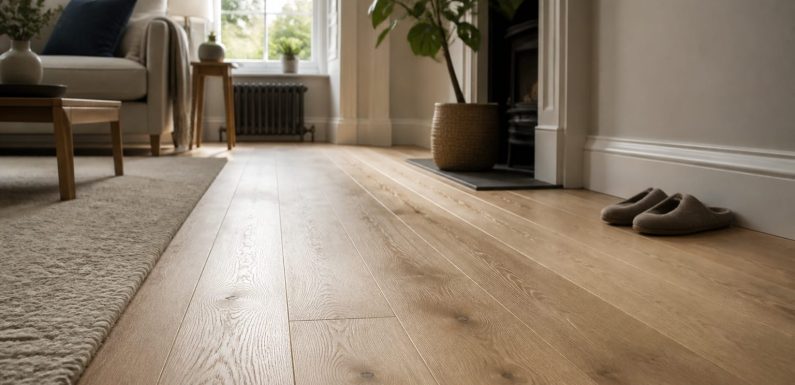
Most types of flooring can be used over an underfloor heating system, some better than others. This page explains which floor coverings are best for underfloor heating and also looks at the floor build up above the heating system.
Tile and Stone
Tile and stone flooring are some of the best flooring types for underfloor heating. As they are very good at conducting heat, they mean that a room will soon be up to temperature and once it has, the flooring will retain the heat. They are usually laid on a screed (a thick layer of concrete) and this is how most wet and electric underfloor heating systems are designed to be used with.
Engineered Wood or Solid Wood
Engineered wood is far better than solid wood for underfloor heating systems. This is because engineered wood is far less likely to expand and contract with heat and so will not suffer from ‘cupping’, ‘gapping’ or cracking as solid wood can. This is because solid wood dries out and swells up with heat. When choosing a timber look product for underfloor heating, go for an engineered product with reasonably sized planks.
LVT and Vinyl
Luxury Vinyl Tiles (LVT) and vinyl floor coverings generally work well over underfloor heating systems but it is essential to check the tog rating of the floor covering as well as the maximum recommended surface temperature in degrees Celsius. Although some products are rated up to 29°C it is common for many products to be restricted to a floor surface temperature of 27°C or below. Exceeding this temperature could potentially cause surface fading and/or softening as well as potentially leading to adhesive failure of the floor covering to the underfloor heating system.
Carpet
Carpet can be used over underfloor heating but should be used in conjunction with a low tog underlay. It is also important to choose a carpet with a low pile height as these tend to insulate less and will allow heat to rise into the room more efficiently. 5 for most domestic systems. See also Underfloor Heating Gloucester.
Laminate
Similarly laminate flooring can be installed over underfloor heating systems. Again though, check the tog rating and the maximum floor temperature for the flooring. The flooring manufacturer will give recommended maximum floor surface temperatures and will rate the flooring in terms of its tog rating. Installing laminate without checking these values can render any warranty with the flooring null and void and may even mean that the heating system has to work even harder to try and heat the space!
Tog Ratings and System Efficiency
In addition to choosing the correct flooring type for underfloor heating, consideration should also be made to the tog rating of the floor coverings and underlays that are to be used. 0 or below in order to allow efficient transfer of heat through the floor covering and floor build-up above. The higher the combined tog rating of the floor covering and underlay, the less efficient the heating system will be and the more the system will be required to work in order to try and transfer heat through the insulation in the floor covering and floor above.
Getting the Subfloor Right
None of this is much good if your subfloor is not fairly flat. And if you are building a new extension or doing a renovation then the detail to get right is the screed depth, the insulation and the floor leveling.
Remember, it’s worth choosing a floor covering and checking the manufacturer’s details before you purchase, but if you choose the right covering for the system, you’ll find that the floor can be warm, even and trouble free for years to come.
