

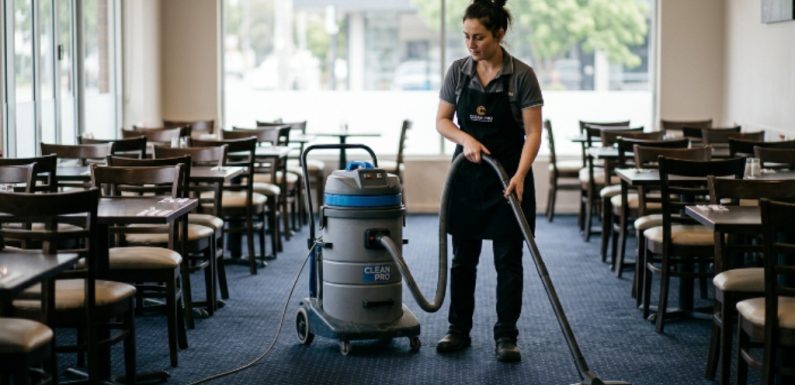
Running a restaurant means keeping every corner spotless. Dirty floors can drive away customers and invite health code violations. Therefore, choosing the right vacuum cleaner for your restaurant is one of the most important decisions you will make for your business.
This guide will walk you through everything you need to know. By the end, you will feel confident picking the best machine for your needs.
Why Restaurants Need a Specialized Vacuum Cleaner
A household vacuum cleaner is simply not built for restaurant life. Restaurants deal with food crumbs, grease particles, hair, and heavy foot traffic every single day. A regular home vacuum will break down quickly under those conditions.
Commercial spaces require machines that can handle extended use without overheating. They also need strong suction power to pull debris from textured tile, carpet runners, or hardwood floors. Additionally, the machine must be easy to empty and maintain between shifts.
Investing in proper industrial cleaning tools from the start saves you money in the long run. You avoid constant repairs, frequent replacements, and the lost time that comes with equipment failure during busy service hours.
Key Factors to Consider Before You Buy
Type of Flooring in Your Restaurant
Before anything else, look at the floors in your space. Different flooring types need different vacuum styles.
Carpet needs a vacuum with strong beater-bar action to lift embedded dirt. Tile and hardwood floors, on the other hand, require gentler suction settings and soft brush heads to avoid scratching. Many restaurants have a mix of both. Therefore, look for a machine with adjustable settings or interchangeable attachments.
Size of Your Space
Square footage matters a great deal. A small café with one dining room has very different needs from a large banquet hall. For bigger spaces, a wide-path vacuum saves significant time during cleaning. Backpack-style vacuums are also worth considering for large areas because they allow staff to move freely without dragging a heavy unit around.
Noise Level
Restaurants often clean during off-peak hours, but not always. A loud vacuum can disturb early diners or staff working nearby. Many commercial models now offer low-decibel motors. Look for machines rated below 70 decibels if noise is a concern in your environment.
Filtration System
Food service environments produce fine dust and allergens. A vacuum without proper filtration simply blows those particles back into the air. Look for machines equipped with HEPA filters. These filters trap 99.97% of particles as small as 0.3 microns. This level of filtration protects both your customers and your staff.
Capacity and Tank Size
Emptying a small vacuum every ten minutes slows your team down. Commercial models generally come with larger dirt tanks or bags. A bigger capacity means fewer interruptions during the cleaning process. However, make sure the tank is also easy to empty and clean, since a messy disposal process discourages thorough maintenance.
Types of Commercial Vacuum Cleaners for Restaurants
Upright Vacuums
Upright models are familiar and easy to use. They work very well on carpeted areas and are generally affordable. However, they can be harder to maneuver around table legs and chair bases. Some staff may also find them tiring to push across large areas.
Canister Vacuums
Canister models separate the motor from the cleaning head. This design makes them more flexible and lighter to move. They are excellent for reaching under furniture and along baseboards. Additionally, they tend to be quieter than upright models.
Backpack Vacuums
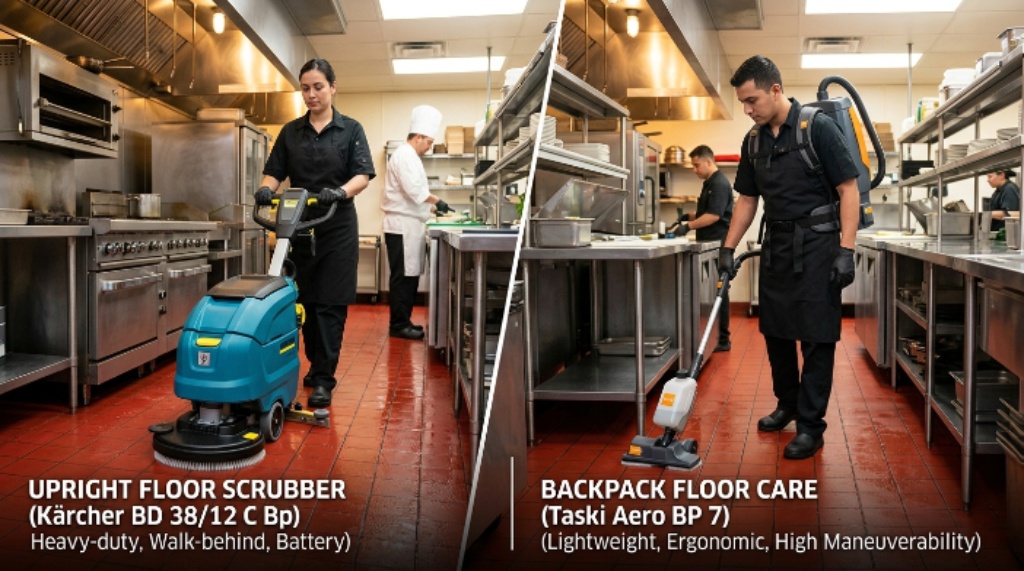
Backpack vacuums are a popular choice for large restaurant dining rooms. Staff wear the unit on their back, freeing both hands to guide the cleaning nozzle. These machines cover ground quickly and reduce fatigue over long cleaning sessions. They are a strong option when floor care efficiency is the top priority.
Wet/Dry Vacuums
Restaurants deal with spills regularly. A wet/dry vacuum handles both liquid messes and dry debris. This versatility makes them a practical choice for kitchens and bar areas. However, they tend to be bulkier and heavier than standard models.
Robotic Vacuums
Robotic vacuums have become more capable in recent years. Some commercial-grade robotic units can map large spaces and work autonomously overnight. They are not a complete replacement for manual cleaning, but they work well as a daily maintenance tool between deeper cleans.
Features That Make a Real Difference
Not all heavy-duty vacuum cleaners are equal. Certain features separate truly excellent machines from average ones.
Look for these when comparing models:
- Long power cords (at least 30 feet) to avoid constant unplugging
- Durable wheels that roll smoothly on all floor types
- Easy-access filter compartments for fast maintenance
- Onboard tool storage for attachments
- Cord rewind mechanisms to speed up packing and storing
- Ergonomic handles to reduce strain on staff
These features may seem minor, but they add up to a much better cleaning experience over time.
Durability and Build Quality
A restaurant vacuum takes a beating. Staff may accidentally knock it into walls, drag it across rough surfaces, or leave it in damp areas near the kitchen. Therefore, build quality should be a top priority.
Look for metal components rather than plastic wherever possible. Check the warranty offered by the manufacturer. A commercial-grade machine should carry at least a two-year warranty on parts and labor. Models backed by strong warranties signal that the manufacturer trusts their own product.
Additionally, consider the availability of replacement parts. Some brands make parts easy to source locally or online. Others require expensive special orders. Choose a brand with good parts availability so repairs are never a major setback.
How to Assess Suction Power
Suction power is measured in several ways, including airflow (CFM), water lift (inches), and amperage. For restaurant settings, airflow is often the most useful measure. Higher CFM means more air moves through the machine, which translates to better pickup on flat surfaces.
A good commercial machine for restaurant use should offer at least 100 CFM of airflow. For carpeted areas, water lift becomes more important, as it measures the vacuum’s ability to pull debris from deep within carpet fibers.
Do not rely on amperage alone as a measure of power. A high-amperage motor does not always mean strong suction. Always ask for CFM and water lift ratings when comparing machines.
Budget Considerations
Commercial vacuums range widely in price. Entry-level commercial models start around a few hundred dollars, while premium units can cost well over a thousand. It is tempting to choose the cheapest option, but that approach often costs more over time.
Think about cost per use rather than sticker price. A durable machine that lasts five years with minimal repairs delivers far better value than a budget model that needs replacing every eighteen months. Additionally, factor in filter and bag replacement costs over time, as these recurring expenses add up.
Maintenance Tips to Extend the Life of Your Vacuum
Even the best machine needs regular care. Building a simple maintenance routine keeps your equipment running at peak performance.
- Empty the tank or replace the bag after every cleaning session
- Clean or replace filters monthly, or more often in high-use environments
- Check brush rolls weekly for tangled hair or debris
- Inspect the power cord regularly for fraying or damage
- Store the vacuum in a dry, protected area away from the kitchen
These simple habits prevent the majority of mechanical failures and extend the useful life of your investment.
Conclusion
Choosing the right commercial vacuum cleaner for your restaurant comes down to understanding your space, your floors, your team, and your budget. Start by assessing the type and size of your flooring. Then consider the features that matter most for your daily routine, such as filtration quality, tank capacity, and noise level.
Invest in a machine built for commercial-grade demands. Prioritize durability, good warranty coverage, and available replacement parts. Whether you choose an upright, canister, backpack, or wet/dry model, make sure it fits the specific needs of your environment.
Proper floor care is not just about appearances. It reflects your commitment to hygiene, safety, and professionalism. The right vacuum makes that commitment easier to uphold every single day.
Frequently Asked Questions
How often should a restaurant vacuum its floors?
High-traffic areas should be vacuumed at least once daily, ideally after each service shift. Kitchens and entryways may need attention multiple times per day depending on foot traffic and food spillage.
Can I use a commercial vacuum in the kitchen?
Yes, but choose a model rated for wet and dry use if your kitchen sees regular liquid spills. Ensure the vacuum has strong filtration to handle fine grease particles common in kitchen environments.
What is the difference between a commercial and residential vacuum?
Commercial vacuums are built for continuous, heavy use. They feature stronger motors, larger dirt capacities, more durable materials, and better filtration than typical residential units. They are designed to withstand the demands of professional cleaning environments.
How long does a commercial vacuum cleaner typically last?
With proper maintenance, a quality commercial vacuum can last five to ten years or more. Cheaper units may only last one to three years under heavy daily use. Regular filter cleaning and bag replacement significantly extend the machine’s life.
Are HEPA filters necessary for restaurant vacuums?
HEPA filters are strongly recommended for food service settings. They capture fine dust, allergens, and airborne particles that standard filters miss. This protects air quality for both customers and staff, and supports compliance with health and safety standards.
Related Topics:
How to Prepare a Bathroom Cleaning Checklist for Bathroom Safety
