

Key Takeaways
- Early detection of roof damage prevents costly interior and structural repairs.
- Warning signs appear both outside and inside your home.
- Some signs indicate minor issues, while others suggest serious structural concerns.
- Regular roof inspections help catch problems before they worsen.
- Ignoring small signs often leads to larger, more expensive damage later.
Your roof works constantly to protect your home from the elements. However, damage often develops gradually before becoming an obvious emergency. Therefore, learning to recognize early warning signs saves you from costly repairs. Drawing from building standards highlighted by https://newhouseproject.com/, this guide covers ten roof damage signs every homeowner should know, what each sign means, and why it matters.
1. Missing or Damaged Shingles
Missing or damaged shingles are among the most visible signs of roof trouble. Wind, storms, and age all contribute to shingles cracking, curling, or falling off. Additionally, this damage exposes the roof deck underneath to water infiltration.
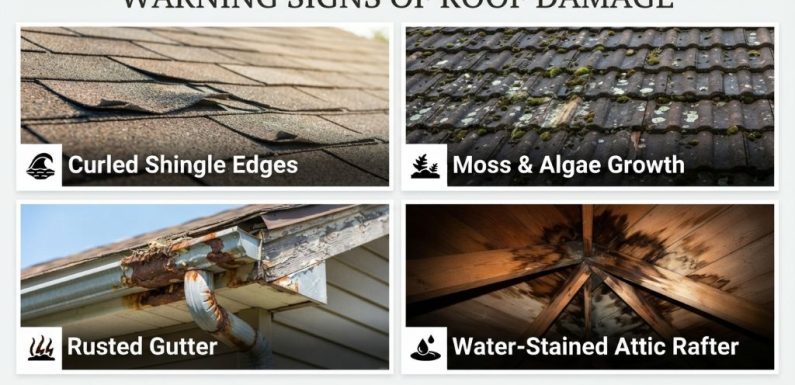
Curling shingles often indicate age-related wear or improper ventilation beneath the roof. This curling can occur at the edges or across the entire shingle surface. Therefore, noticing this pattern early helps you address the underlying cause.
Cracked shingles frequently result from sun exposure and temperature fluctuations over time. Additionally, this damage weakens the shingle’s ability to shed water effectively. Small cracks can quickly worsen during storms or high winds.
Watch for these specific signs of shingle damage:
- Shingles completely missing from sections of the roof.
- Curling or buckling shingles, especially at the edges.
- Cracked shingles scattered across the roof surface.
- Shingles that appear loose or lifted from the surface.
Ignoring missing shingles allows water to seep directly into the roof deck. Therefore, this exposure can lead to rot, mold, and structural damage over time. Addressing missing shingles promptly prevents this cascade of additional problems.
A few isolated missing shingles often qualify for simple repair. However, widespread shingle damage across the roof suggests a bigger underlying issue. Therefore, the extent of damage helps determine whether repair or replacement makes more sense.
2. Granule Loss in Gutters
Asphalt shingles are coated with granules that protect against UV rays and weather. Over time, these granules naturally wear away as shingles age. However, excessive granule loss signals your roof may be nearing the end of its lifespan.
Checking your gutters after cleaning reveals how much granule loss has occurred. Additionally, a small amount of granule loss is normal, especially on newer roofs. Therefore, comparing current amounts to previous cleanings helps identify concerning trends.
Bald spots on shingles, where granules have worn away completely, indicate more advanced aging. This exposed area becomes more vulnerable to UV damage and moisture. Additionally, these spots often appear darker than surrounding, granule-covered areas.
Identify granule loss through these signs:
- Large amounts of granules collecting in gutters or downspouts.
- Bald or shiny patches visible on the shingle surface.
- Shingles appearing thinner or more transparent in certain areas.
- Increased granule loss following storms or heavy rain.
According to the National Roofing Contractors Association, significant granule loss often indicates shingles are approaching the end of their functional lifespan. This makes granule tracking a useful long-term indicator.
Excessive granule loss doesn’t require immediate replacement but does warrant closer monitoring. Therefore, scheduling a professional inspection helps determine your roof’s remaining lifespan. This proactive check prevents unexpected leaks from developing without warning.
3. Sagging Roof Areas
A sagging roofline represents one of the most serious warning signs homeowners can notice. This issue often indicates structural damage to the roof deck or supporting framework. Therefore, sagging should never be dismissed as a minor cosmetic issue.
Viewing your roof from across the street helps you notice sagging more easily. A healthy roof should appear straight and even along its entire length. Additionally, any dipping or wavy sections indicate a developing structural problem.
Sagging often results from prolonged water damage weakening the wood decking beneath shingles. Additionally, excessive weight from snow accumulation or multiple roofing layers can contribute. This structural weakening happens gradually, making early detection especially important.
Recognize roof sagging through these warning signs:
- Visible dips or wavy sections along the roofline.
- Sagging most noticeable between roof trusses or rafters.
- Interior ceiling sagging corresponding to roof areas above.
- Doors or windows becoming difficult to open on upper floors.
Interior sagging often accompanies exterior roof sagging, indicating water has penetrated deeply. Therefore, checking both areas provides a complete picture of the problem’s severity. This combination of signs often points to significant, ongoing water damage.
Sagging requires immediate professional attention regardless of your roof’s age. Therefore, contacting a roofing contractor promptly helps prevent potential structural collapse. This warning sign ranks among the most urgent on this entire list.
4. Water Stains on Ceilings
Water stains on interior ceilings often provide the first clear evidence of a roof leak. These stains typically appear as yellow, brown, or copper-colored patches. Additionally, they often grow larger over time if the underlying leak continues.
Stains commonly appear near chimneys, skylights, or roof valleys where leaks frequently originate. Additionally, these areas have more seams and joints where water can penetrate. Therefore, checking these specific locations helps identify the leak’s likely source.
The size and shape of water stains can indicate how long the leak has persisted. Small, contained stains often suggest recent leaks caught early. However, large or spreading stains indicate a more significant, ongoing problem.
Watch for these characteristics of ceiling water stains:
- Yellow, brown, or dark rings appearing on ceiling surfaces.
- Stains located near chimneys, skylights, or roof valleys.
- Growing or spreading stains indicating an active, ongoing leak.
- Stains accompanied by peeling paint or bubbling texture.
Addressing water stains promptly prevents further damage to ceiling materials and structural components. Therefore, contacting a professional as soon as you notice staining protects your home. This quick response often minimizes the total repair cost significantly.
Even stains that appear dry and old deserve investigation, as leaks can become active again. Therefore, don’t assume a stain is no longer a concern without professional evaluation.
5. Daylight Through the Roof Boards
Checking your attic for visible daylight offers a direct way to spot roof damage. This sign indicates gaps, holes, or significant wear in your roof’s structure. Additionally, this inspection method reveals problems that aren’t visible from outside.
Perform this check during daytime hours with your attic lights turned off. Small pinpricks of light often indicate minor gaps around nail holes. However, larger beams of light suggest more significant structural damage requiring attention.
This method also helps identify areas prone to water infiltration during rain. Therefore, marking these locations helps guide repairs and confirms problem areas afterward. This simple technique provides valuable diagnostic information without professional tools.
Look for these signs during an attic daylight check:
- Visible light coming through the roof boards or decking.
- Gaps around vents, chimneys, or other roof penetrations.
- Water stains on the underside of the roof deck.
- Damp or discolored insulation near light gaps.
Any visible daylight indicates a pathway for water to enter during rain or snow. Therefore, this check helps homeowners catch potential leak sources before active leaking occurs. Addressing these gaps promptly prevents future interior water damage.
This inspection method works well as part of your regular seasonal roof maintenance. Therefore, incorporating this check into your routine helps catch developing issues early.
6. Moss and Algae Growth
Dark streaks or green patches on your roof often indicate algae or moss growth. While algae is typically cosmetic, moss can cause more significant damage over time. Therefore, distinguishing between these two growth types matters for proper treatment.
Algae typically appears as dark streaks running down the roof surface. This growth thrives in humid climates and doesn’t usually damage shingles directly. However, it can affect your home’s curb appeal and indicate excess moisture retention.
Moss growth presents a more serious concern for your roof’s health. This growth traps moisture against the shingle surface, accelerating deterioration. Additionally, moss roots can lift shingle edges, creating pathways for water infiltration.
Identify these growth patterns on your roof:
- Dark streaks or discoloration, typically indicating algae growth.
- Green, cushion-like patches suggesting moss growth.
- Growth concentrated in shaded or consistently damp roof areas.
- Lifted shingle edges near areas of moss growth.
According to Oregon State University Extension research, moss growth on roofs retains moisture that can accelerate shingle deterioration and wood decay. This makes moss removal more urgent than algae treatment.
Removing moss carefully, without damaging shingles, helps protect your roof’s integrity. Therefore, professional cleaning services often provide safer results than DIY removal attempts. This service prevents accidental shingle damage during the cleaning process.
7. Damaged or Missing Flashing
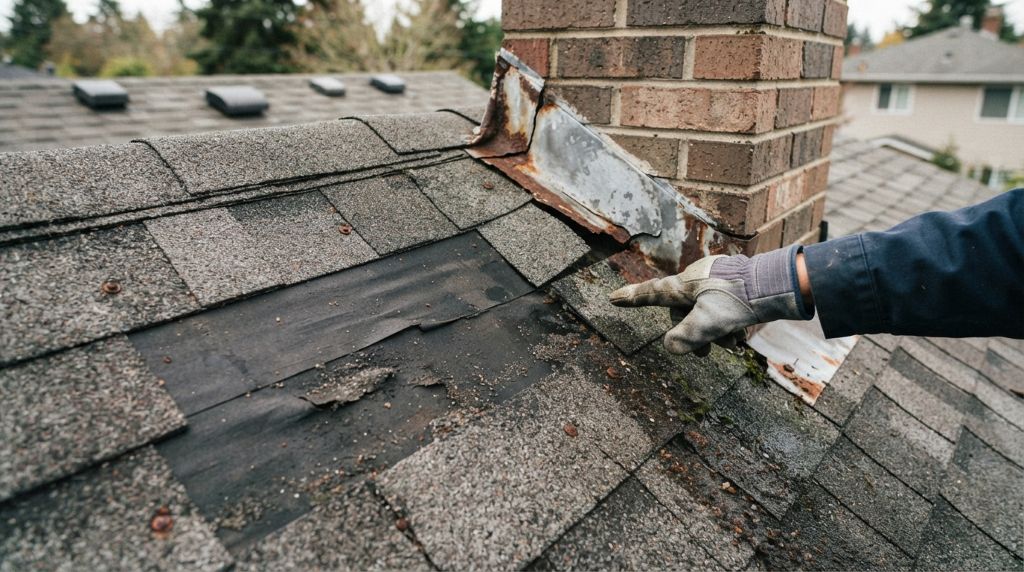
Flashing seals the joints around chimneys, vents, skylights, and roof valleys. This metal material prevents water from penetrating these vulnerable connection points. However, flashing can crack, rust, or become loose over time.
Damaged flashing ranks among the most common sources of roof leaks. Additionally, this issue often develops gradually as sealant deteriorates or metal corrodes. Therefore, regular flashing inspection helps catch problems before leaks develop.
Flashing damage frequently occurs around chimneys due to temperature fluctuations and settling. Additionally, skylight flashing faces similar stress from expansion and contraction. These areas deserve extra attention during routine roof inspections.
Watch for these signs of flashing problems:
- Visible rust or corrosion on metal flashing surfaces.
- Cracked or deteriorated sealant around flashing edges.
- Flashing that appears loose, bent, or separated from the roof.
- Water stains specifically located near chimneys or skylights.
Replacing or resealing damaged flashing often resolves leaks without requiring broader roof repair. Therefore, this targeted fix proves cost-effective when caught early. Professional installation ensures proper sealing and long-term protection.
Regular flashing inspection, especially after storms, helps maintain this critical protective element. Therefore, including this check in your seasonal roof maintenance routine prevents unexpected leaks.
8. Higher Energy Bills
Unexplained increases in heating or cooling costs can sometimes indicate roof problems. Damaged roofing or poor ventilation allows conditioned air to escape more easily. Additionally, this issue often develops gradually alongside other roof damage.
Roof damage can compromise your home’s insulation effectiveness in several ways. Water infiltration often dampens attic insulation, reducing its ability to regulate temperature. Therefore, this hidden damage affects comfort and energy costs simultaneously.
Poor attic ventilation also contributes to energy inefficiency and roof deterioration. Additionally, inadequate ventilation traps heat and moisture, accelerating shingle aging from underneath. This connection makes ventilation an important factor in overall roof health.
Consider these connections between energy bills and roof condition:
- Gradually increasing energy bills without changes in usage habits.
- Uneven temperatures between different rooms or floors.
- Ice dams forming on the roof during winter months.
- Excessive heat buildup in the attic during summer.
Ice dams specifically indicate ventilation problems that can also damage roofing materials. Therefore, addressing this issue protects both your energy efficiency and roof integrity. This connection makes ice dam prevention valuable for multiple reasons.
If your energy bills rise without explanation, consider having your roof and attic ventilation inspected. Therefore, this investigation might reveal roof damage contributing to the increased costs.
9. Rusted or Damaged Gutters
While technically separate from the roof itself, gutters play a crucial role in roof drainage. Damaged or clogged gutters can cause water to back up under roofing materials. Therefore, gutter condition directly affects your roof’s overall health.
Rust spots on metal gutters indicate aging and potential failure points. Additionally, sagging gutters suggest they’re carrying excess weight from debris or standing water. This combination often leads to water overflow near the roofline.
Clogged gutters prevent proper water drainage away from your roof and foundation. Additionally, this standing water can seep under shingles during heavy rain. Therefore, regular gutter cleaning supports both gutter and roof longevity.
Watch for these signs of gutter problems affecting your roof:
- Visible rust spots or holes in gutter sections.
- Gutters pulling away from the roofline or sagging visibly.
- Water overflowing gutters during moderate rainfall.
- Plant growth or debris buildup within the gutter system.
Water overflowing from clogged gutters can seep behind fascia boards and damage the roof edge. Therefore, this issue creates a pathway for water infiltration beyond just gutter function. Regular maintenance prevents this cascading damage effectively.
Cleaning gutters at least twice yearly helps prevent these roof-related complications. Additionally, replacing damaged gutter sections promptly protects your roof’s edge from ongoing water exposure.
10. Roof Age Approaching Expected Lifespan
Even without obvious damage, an aging roof deserves closer attention and monitoring. Most roofing materials have a predictable lifespan based on their composition. Therefore, tracking your roof’s age helps you anticipate future needs.
Asphalt shingle roofs, the most common type, typically last twenty to thirty years. As roofs approach this range, they become more susceptible to multiple, simultaneous issues. Additionally, materials naturally weaken and lose effectiveness with age, regardless of visible damage.
Reviewing your home’s records or asking previous owners can help determine your roof’s installation date. Therefore, this information provides valuable context when evaluating other warning signs. Combining age awareness with visible inspection offers the clearest picture.
Consider these factors related to roof age:
- Roof approaching or exceeding its material’s expected lifespan.
- Increasing frequency of minor repairs needed over recent years.
- Multiple warning signs appearing simultaneously across the roof.
- Difficulty finding matching replacement shingles for repairs.
An aging roof combined with other warning signs on this list often points toward replacement. Therefore, professional evaluation helps clarify whether your roof’s age warrants proactive replacement. This assessment considers both age and current condition together.
Don’t wait for complete failure before addressing an aging roof nearing its expected lifespan. Therefore, proactive planning allows you to budget and schedule replacement on your own timeline.
Conclusion
Recognizing these ten warning signs helps you protect your home from costly roof damage. From missing shingles to interior water stains, each sign offers valuable information. Additionally, looking for signs of roof damage regularly can help you spot small issues before they become major problems. Therefore, staying attentive to your roof’s condition protects your entire home long-term. Regular inspections and prompt action keep your roof performing reliably for years to come.
Noticing any of these warning signs? Contact a licensed roofing contractor today for a professional inspection and expert guidance.
Frequently Asked Questions
What is the first sign of roof damage I should look for?
Missing or damaged shingles are usually the most visible early warning sign.
Can moss growth actually damage my roof?
Yes, moss traps moisture against shingles, accelerating deterioration and potential water damage.
Is a sagging roof always a serious problem?
Yes, sagging typically indicates structural damage requiring immediate professional attention.
How can higher energy bills relate to roof problems?
Damaged roofing or poor ventilation can reduce insulation effectiveness, raising energy costs.
How often should I check my roof for warning signs?
Inspect your roof at least twice a year and after major storms.
