


You know that stiff, achy feeling when you roll out of bed in the morning? The one that makes you tilt your head like a confused puppy just to avoid pain? If you’re a side sleeper, the culprit is often hiding right under your head: the wrong pillow. Standard pillows fail to bridge the gap between your shoulder and your neck, forcing your spine into an unnatural curve for eight hours straight. This isn’t just about discomfort; it’s about cumulative damage to your cervical spine.
But here’s the good news: you don’t have to accept morning stiffness as a lifestyle. A dedicated cervical pillow for side sleepers is engineered to fill that void, maintain alignment, and support the natural lordotic curve of your neck. In this guide, we’ll break down exactly how to choose the right one based on your body type, sleep position nuances, and firmness preferences, ensuring you wake up feeling refreshed, not rickety.
What Exactly Is a Cervical Pillow and How Does It Differ from a Standard Pillow?
A cervical pillow is a contoured support device designed to cradle the neck and head, maintaining a neutral spinal alignment while you sleep. Unlike standard fluffy pillows that raise your head independently of your neck, cervical pillows use a curved or ergonomic shape to support the entire cervical spine. They are specifically designed to prevent the “hanging head” effect that plagues most traditional bedding.
The Anatomy of a Contoured Design
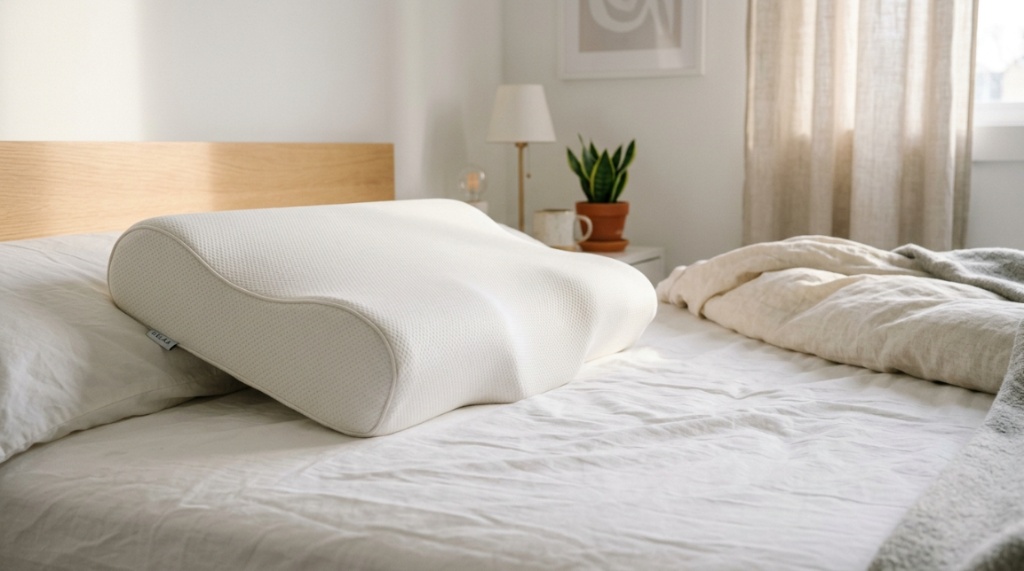
Most cervical pillows feature a distinctive “butterfly” or “wave” shape. This includes a deeper dip for your head and a raised, firmer ledge for your neck. This contour works to keep your head from rotating forward or sideways. When you lie on your side, the pillow’s height must fill the space between your ear and the outside of your shoulder, keeping the nose in a straight line with the sternum.
Why Standard Pillows Fail Side Sleepers
Standard pillows are typically flat and uniform. For side sleepers, they often provide too little height, causing the neck to bend downward toward the mattress. Alternatively, if you stack two pillows, you get too much height, causing the neck to bend upward. Both scenarios lead to muscle strain, restricted blood flow, and potential nerve compression.
The Financial and Health Investment
Choosing the right pillow is a health investment. While a standard pillow might cost $20, the cost of physiotherapy, chiropractic adjustments, and over-the-counter pain relievers far exceeds the price of a quality ergonomic pillow. The goal is not just comfort, but the prevention of chronic issues like cervical spondylosis and tension headaches.
Why Does Sleep Position Determine Pillow Height More Than Anything Else?
Your shoulder width is the single most critical measurement for a side sleeper’s pillow height. If you sleep on a pillow that is too low, your head drops, straining the deltoid and trapezius muscles. If it is too high, your neck compresses, restricting the airway and straining the sternocleidomastoid. Getting this “stack height” correct is non-negotiable.
Calculating Your Ideal Loft
Lie on your side with your head on the pillow. Have a partner or use a mirror to check if your spine is straight. A simple rule of thumb: if you are sleeping on a medium-firm mattress, the pillow loft should match the distance from your ear to the outer edge of your shoulder. For most women, this is 4-5 inches; for most men, it is 5-6 inches.
The Mattress Factor
Your mattress changes the game. If you sleep on an extra-plush pillow-top mattress, your shoulder sinks deeper, meaning you need a taller pillow loft to compensate. Conversely, on a firm, thin mattress, your shoulder sinks less, requiring a shorter pillow. You cannot pick a pillow height without considering your bed’s surface.
Tummy and Back Sleeping Considerations
Even if you are a dedicated side sleeper, you likely shift positions during the night. If you occasionally roll onto your back, the high loft of a side-sleeper pillow becomes uncomfortable. Many premium options now offer a “dual-incline” design with a lower section for back sleeping and a higher ridge for side sleeping to accommodate this movement.
Which Filling Material Offers the Best Support and Breathability?
Memory foam, latex, and shredded fiber each offer drastically different support profiles. For a cervical pillow, the material dictates not just the feel, but the longevity of the support. You want a material that pushes back against the weight of your head, rather than simply compressing flat.
Memory Foam: The Contouring Classic
Traditional memory foam offers the best “mold” factor. It responds to heat and pressure, shaping to the exact contour of your neck. However, it can sometimes retain heat and feel “dead” or sluggish. Look for gel-infused or copper-infused versions that promote airflow while maintaining pressure relief.
Latex: The Responsive Alternative
Latex is bouncier and more resilient than memory foam. It offers immediate pushback, which is often preferred by those who dislike the “sinking” sensation. Natural latex is also inherently breathable and dust-mite resistant. The downside is that it can be heavy and is often more expensive than synthetic foams.
Shredded Fill: The Adjustability King
Some cervical pillows use shredded memory foam or latex inside a contouring outer shell. This allows you to remove or add filling to customize the exact loft. This is arguably the best option for first-time users because it allows you to “tune” the pillow to your exact anatomy rather than guessing the fit. If you are unsure where to start, look for a brand that offers a cervical pillow for side sleepers with adjustable inserts.
How Do You Test a Cervical Pillow Before Committing?
The “try before you buy” rule is absolute. Since neck pain can be exacerbated by the wrong gear, you need to test the pillow in your actual sleeping position for several consecutive nights. Most reputable brands offer a 30, 60, or even 100-night sleep trial, which is essential because your body needs time to adjust.
The 15-Minute Lounge Test
When you receive the pillow, do not just press on it with your hand. Lie down for 15-20 minutes in your exact sleeping position. Check for pressure points under the ear and jaw. If you feel numbness or tingling, the pillow is too tall or too firm. If you feel a stretch in your neck, it is too low.
The “Face Alignment” Checklist
- Eyes Level: Your eyes should be looking straight ahead at the ceiling if lying on your back, or straight forward if on your side—not angled up or down.
- Jaw Relief: The pillow should not push your jaw upward, as this can lead to TMJ pain.
- Breathing Ease: Your airway should feel open and unobstructed.
Adjusting to the Contour
Be aware that the first 2-3 nights might feel strange. A contoured pillow forces your neck muscles to relax in a new way. If you feel soreness after the first night, that is often muscle fatigue from releasing tension, not structural damage. However, if the pain persists past the third night, the fit is likely incorrect,
Proper spinal alignment isn’t just about your neck; supporting your lower body correctly is equally vital for total pain relief. Learn more in our guide on fix hip pain using a knee pillow.
Is a High Loft or Low Loft Better for Wide Shoulders?
Wide shoulders require a high loft, but not necessarily a high-firmness pillow. You need the pillow to physically support the weight of your head without collapsing. A high-loft, soft to medium-firm pillow is ideal for broad shoulders because it provides the necessary height while still contouring to the neck.
Understanding Shoulder Slope
Shoulder width is only half the equation; the slope of your shoulder matters too. A muscular, sharply angled shoulder needs a firmer pillow to prevent the head from rolling off the curve. A sloping, less muscular shoulder (common in petite frames) needs a softer, lower-profile pillow that can “wrap” around the shoulder without pushing the head away.
The “Curl-Up” Position
If you sleep in a tight fetal position, your shoulder moves forward, opening up space. This means you might need a slightly lower loft than a back-sleeping side position. If you sleep with your bottom arm outstretched straight, the shoulder pushes up, requiring a higher loft.
Trade-Offs Between Loft and Firmness
| Body Type | Recommended Loft | Recommended Firmness |
|---|---|---|
| Petite (Shoulders < 20″) | 3-4 inches | Soft to Medium-Soft |
| Average (Shoulders 20″-23″) | 4-5 inches | Medium |
| Broad/Large (Shoulders > 23″) | 5-6 inches | Medium-Firm to Firm |
Can an Improper Cervical Pillow Worsen Migraines and Vertigo?
Yes, absolutely. A misaligned neck creates tension in the suboccipital muscles located at the base of the skull. This tension can restrict blood flow to the brain and aggravate the trigeminal nerve, which is directly linked to migraine pathways. If you suffer from chronic headaches, your pillow is a major suspect.
The Anatomy of Tension Headaches
When your neck is bent at a severe angle, the muscles in the upper cervical spine fatigue rapidly. This spasm pulls on the occipital bone, creating a “referred pain” that wraps around the skull to the forehead. A pillow that maintains the curve reduces this muscular load significantly.
Vertigo and Proprioception
The joints in your neck (facet joints) are packed with proprioceptors—sensors that tell your brain where your body is in space. If these are compressed by a poor sleeping angle, they can send conflicting signals to the brain, resulting in a feeling of dizziness or spinning upon waking. Stabilizing the neck with a proper contour often reduces these episodes.
When to Seek Medical Advice
While a pillow can alleviate muscular pain, it cannot fix structural issues like herniated discs or bone spurs. If your vertigo is sudden, severe, or accompanied by hearing loss, you must consult a physician immediately. The pillow is a tool for prevention, not a cure for pathology.
How Long Does a Cervical Pillow Last and When Should You Replace It?
A high-quality cervical pillow will last between 18 to 36 months with regular use. Unlike standard pillows, the contoured shape relies on specific compressibility. Once the foam loses its resilience, the support zone becomes too soft to maintain alignment. If you wake up with arm tingling or the pillow develops a permanent indentation where your head rests, it’s time to replace it.
Signs of Pillow Fatigue
- Visible Indentation: The pillow no longer springs back after you get up.
- Night Sweats: The foam has broken down and is holding more body heat.
- Morning Pain: Your neck aches even though you didn’t change positions.
- Allergy Issues: Dust mites accumulate despite regular cleaning; replacing every two years is ideal.
Cleaning and Lifespan Extending
Always use a washable cover and wash it weekly. Do not put the foam core in the washing machine—this breaks down the cell structure. Spot clean the core only. Allowing the pillow to air out in the sun for a few hours every month can help kill bacteria and restore some fluffiness.
The Cost-Per-Night Equation
If a pillow costs $80 and lasts 2 years (730 nights), that is roughly 11 cents per night. Compare that to the cost of a single physiotherapy session. Buying a durable, high-quality pillow is one of the most cost-effective healthcare decisions you can make.
What Are the Key Differences Between Water-Filled and Foam Cervical Pillows?
Water-filled pillows offer the ultimate customization of loft, but they lack the uniform pressure distribution of memory foam. Water pillows can shift during the night, creating waves and instability, whereas foam maintains a static, predictable shape. However, water provides zero point pressure, which is excellent for reducing systemic pressure points.
Stability vs. Adjustability
Memory foam is static. Once it is shaped, it stays for the night. Water is dynamic. It responds to every roll and shift. For side sleepers, stability is often preferred to prevent shoulder impingement. If you toss and turn violently, the water sloshing might wake you up.
Temperature Regulation Differences
Water is a natural heat sink—it draws heat away from the body, making it very cooling. Foam, even gel-infused, generally retains more heat. If you are a hot sleeper, the water option might be tempting, but you can find better results with latex or a cooling gel layer on foam.
Maintenance and Safety
Water pillows are prone to leaks, though modern caps are robust. They are also heavy to travel with. Foam is low-maintenance and lightweight. For most users, the slight adjustability of water is not worth the risk of leakage when a high-quality foam with adjustable shredded fill can achieve a similar result with more safety.
How Should You Break In a New Cervical Pillow?
Transitioning to a cervical pillow is a process. You cannot go from a flat, mashed pancake pillow to a firm contour overnight. You need to give your neck muscles time to adapt to the new posture. Start by using the pillow for just 3-4 hours at the beginning of the night.
The Gradual Introduction Cycle
- Week 1: Use the pillow for the first half of the night. If you wake up, go back to your old pillow for the remainder.
- Week 2: Use the new pillow all night, but allow yourself to switch if you feel a headache building.
- Week 3: Commit to the new pillow exclusively. Any initial muscle soreness should have subsided.
Heat Therapy Activation
For memory foam, heat helps it soften. Before laying down, press your hands firmly on the contour for 30 seconds. The warmth helps the foam flow to your body shape faster. Do not use electric heating pads on the pillow itself, as this can damage the foam matrix.
Posture Monitoring
If you have a partner or a smartphone camera, record yourself sleeping in the first week. Analyze the footage to see if your head rolls off the contour. If it does, you either need a different loft or a wider pillow surface.
Frequently Asked Questions
Is it normal for a cervical pillow to hurt at first?
Yes, mild discomfort is normal for the first 2-3 nights as your muscles stretch and realign. However, sharp pain, numbness, or tingling is not normal. If these occur, the pillow loft is incorrect, and you should stop using it immediately.
Should side sleepers use a firm pillow?
Not necessarily. The firmness should be based on the material. A firm pillow with a low loft will create pressure points on the jaw. A medium-firm, contoured pillow is usually the best compromise for side sleepers to provide support without creating “pushback.”
Can a cervical pillow help with snoring?
It can. By opening the airway and preventing the neck from collapsing, a cervical pillow reduces the restriction in the pharynx. This is not a cure for sleep apnea but can significantly reduce simple snoring in position-dependent cases.
How do I know if my pillow is too high?
If you wake up with neck pain on the side you slept on, or a headache at the base of your skull, the pillow is likely too high. You can also test by sleeping with your arm under the pillow to mimic a lower loft; if the pain stops, your pillow was elevated too much.
What is the best position to sleep in with a cervical pillow?
The best position is the one you sleep in most. However, the pillow must be rotated correctly. The “trough” or lower contour is for the head, and the “ridge” or higher lip goes under the neck. Sleep on your side or back; do not sleep on your stomach with a cervical pillow.
Ultimately, picking the right support is about understanding your anatomy, not just aesthetics. The market is flooded with options, and the best pillow is the one that disappears into your life while keeping your spine straight. Take the time to measure your shoulder width, assess your mattress, and take advantage of sleep trials. Your neck supports the weight of your head every waking moment—give it a fighting chance when you sleep.
Remember that this is a personal journey. What works for a bodybuilder might not work for a petite runner. Trust the science of alignment, but listen to your body’s feedback mechanism. If you prioritize spinal hygiene over habit, you will likely find relief within a couple of weeks.
Your best self starts with a good morning. Don’t let a soft, lumpy pillow dictate how you feel for the rest of the day. If you’re ready to upgrade your sleep setup and explore specific top-rated models that have been vetted for neck support and migraine relief, take a look at our curated recommendations to kickstart your search.
Conclusion
Choosing a cervical pillow for side sleeping is not a luxury; it is a necessity for spinal health. The wrong pillow leads to stiffness, headaches, and a host of related issues, while the right one ensures you wake up with energy and zero pain. You now have the knowledge to evaluate loft, firmness, and material scientifically. Measure your body, consider your mattress, and leverage sleep trials to find your perfect match.
Don’t settle for a restless night. Commit to fixing your sleep posture today. Your neck will thank you tomorrow morning.
