

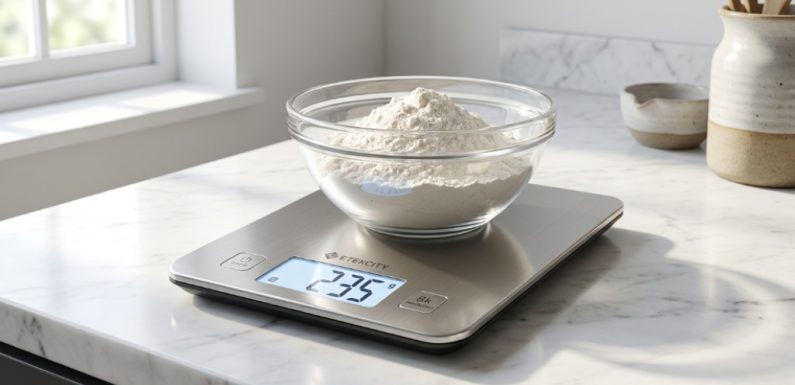
You’re trying to meal prep for the week, dial in your coffee-to-water ratio, or finally follow a baking recipe that calls for ingredients in grams. Then you realize your old scale is inaccurate, or you don’t have one at all. In the world of cooking and portion control, guessing simply doesn’t cut it. If you’ve been browsing options, you’ve likely stumbled upon the brand that dominates search results and Amazon listings, but you need to know if it actually performs. The question isn’t just about popularity; it’s about reliability, accuracy, and whether it fits your specific daily routine.
This guide provides a detailed evaluation of the Etekcity food scale, breaking down its features, accuracy, usability, and long-term durability. We will look at which models suit different needs, what pitfalls to watch out for, and how it compares to the reality of daily kitchen use. By the end, you will know exactly whether this tool deserves a spot on your countertop or if you should keep looking.
Key Takeaways
- Etekcity scales offer laboratory-grade accuracy (1g increments) that is sufficient for both recipe scaling and nutritional tracking, but they require proper surface placement to maintain that precision.
- The brand covers a wide spectrum of models, from budget mechanical dials to high-tech Bluetooth units that sync with fitness apps; your choice should align with your need for smart features versus simplicity.
- Battery life and unit size are critical differentiators among models—the compact “digital kitchen scale” models prioritize portability, while the “food scale with nutritional data” options require more counter space.
- Zeroing (tare) functionality is a standard, robust feature, allowing you to measure multiple ingredients in the same bowl without performing complex math, which is essential for baking.
- Surface flexibility is a limitation; they work best on flat, hard surfaces, and using them on textured or uneven countertops can lead to frustrating weighing errors.
Why Accuracy Matters More Than You Think
When a recipe calls for 200 grams of flour, the difference between 190 and 210 grams can alter the texture of your bread or cake. Most Etekcity models boast a 1-gram resolution. This means they can detect changes as small as a single gram up to their maximum capacity, usually 11 pounds (5 kilograms). This level of precision is not just for bakers; it is vital for those tracking macronutrients, as a “serving” of peanut butter or chicken can vary significantly if you are weighing in ounces rather than grams.
The technology uses four high-precision strain gauge sensors located in the corners of the scale. Unlike cheaper scales with a single central sensor, this multi-sensor setup ensures that you get the same reading whether your bowl is perfectly centered or slightly offset. However, this accuracy is contingent on the environment. If you place the scale on a rug, a dish towel, or a warped cutting board, the weight distribution will be compromised, resulting in incorrect readings that can ruin your calculations.
Understanding the “Tare” Function for Precision
The tare function, or “zeroing” feature, allows you to place a bowl on the scale, press the button to reset the reading to zero, and then add ingredients. Professional chefs and bakers rely on this for efficiency. When you weigh your oats, then decide to add honey, you simply press tare again to measure only the honey’s weight. Etekcity handles this function well; the button is responsive, and the display updates instantly, making multi-ingredient recipes far less messy and more accurate than using measuring cups.
Navigating the Etekcity Product Lineup
One of the primary reasons Etekcity is frequently discussed is its vast range of products. It is not a one-size-fits-all brand. They segment their products heavily, which can lead to decision paralysis. To avoid buyer’s remorse, you must distinguish between their basic models and their smart, connected versions.
The Mechanical vs. Digital Divide
While Etekcity is famous for digital readouts, they also produce mechanical spring scales. If you see a mechanical Etekcity, understand this is their budget line. These do not offer the 1g accuracy of their digital siblings and are generally intended for rough weighing, such as postal packages or large produce. For a kitchen, you should strictly focus on their digital lines. The digital sensors deliver the consistency required for culinary tasks, whereas the mechanical versions are prone to spring fatigue and calibration drift over time. Keep your kitchen looking pristine while you prep your ingredients by learning how to remove tough kitchen counter stains fast.
The Digital Kitchen Scale: The Workhorse
The classic digital models are straightforward. They feature a large LCD display, a steel or plastic top, and simple buttons (Power/Tare and Mode/Unit). You press “Mode” to switch between grams, ounces, pounds, and milliliters (for water). If you are looking for a tool to weigh raw meat for portioning or coffee beans for brewing, this is your best bet. They are powered by AAA batteries, which typically last for months with daily use of a few minutes. The simplicity is their strength; there are no menus to navigate or app connections to fail.
The Smart Scale: Integration and Nutritional Data
The higher-tier Etekcity models feature Bluetooth connectivity. These are specifically marketed for fitness enthusiasts. When you weigh chicken breast, the companion app (VeSync) can automatically calculate the calories, protein, fat, and carbohydrates based on the weight. This is a unique selling point that removes the manual labor of logging food into separate apps.
However, this convenience has trade-offs. The scale requires batteries (it does not have a rechargeable battery), and the Bluetooth connection can occasionally drop, requiring you to reopen the app to re-sync data. Furthermore, the app’s database of foods is vast but not infinite. For packaged goods with unique barcodes, you may still need to manually input the data. If you do not use a fitness app, paying extra for this connectivity is a waste of money.
Capacity and Increments: Finding the Sweet Spot
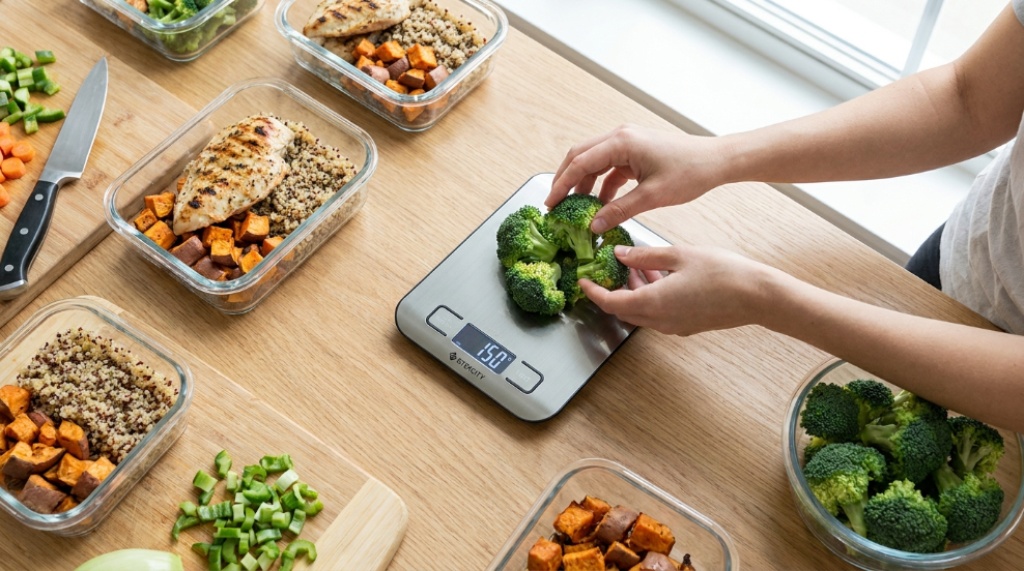
Most Etekcity digital scales cap out at 11 lbs (5 kg). This is generally sufficient for kitchen duties, but it is a limitation for large batches. If you are making a massive batch of bread dough or weighing an entire large roast, the scale will error out with an “O-Ld” (overload) reading. Should you need to weigh more, you must divide your ingredients.
The display increments are where you must pay close attention. While they all claim “accurate to 1g,” this accuracy usually applies in the middle of the range. At the upper limits (over 5 lbs), you may see slight discrepancies. Additionally, some models have a “low weight” threshold. If you try to weigh a single leaf of basil (weighing less than 2 grams), some models may not register it unless a special “high-precision” mode is activated. For everyday ingredient weighing, this is rarely an issue, but it is a factor for those weighing spices or supplements.
Surface Sensitivity and Real-World Setup
Etekcity scales are equipped with rubber feet that prevent sliding, but they also create a sensitivity issue. If the scale is placed on a glass or metal surface that has even a slight curvature or warping, you may get bouncing readings. You must ensure the surface is perfectly flat. Furthermore, static electricity can cause issues. On dry days, if you wipe the scale with a synthetic cloth, the charge can cause the scale to display random numbers. To fix this, you simply wait a few seconds or use a slightly damp cotton cloth to wipe the top before turning it on.
Another overlooked factor is the environment. If you use the scale near a stove where hot steam rises, the moisture can corrode the internal electronics over time. Store the scale away from the stove and sink. While the top surface may be easy to wipe down, the scale is not waterproof; submerging it or running it under a faucet will destroy it.
Cost vs. Value: What Are You Actually Paying For?
Etekcity’s pricing strategy is aggressive. Their basic digital scales often sit at a price point that undercuts competitors like OXO or Escali by a significant margin. This makes them an excellent choice for those who need a reliable scale but are budget-conscious. However, you should not confuse “affordable” with “cheap.” The plastic casing on the entry-level models is durable but does not have the rigid, premium feel of metal-cased competitors. If you drop a heavy cast-iron pan onto an Etekcity, it will likely crack, whereas a metal scale might just dent.
When you step up to the Bluetooth models, the price increases substantially, often matching the cost of more premium scales from established German or Japanese manufacturers. At this price point, you are paying for the software integration as much as the hardware. Evaluate if the app support justifies the premium. If you only weigh ingredients for cooking and not for app-based calorie tracking, the basic digital scale remains the best value proposition on the market.
Cleaning and Maintenance: Keeping the Sensors Honest
Kitchen tools get dirty. Flour dust, oil splatter, and wet ingredients are inevitable. The best way to maintain accuracy is to wipe the scale down immediately after use. Do not use harsh chemical cleaners; a simple damp cloth is sufficient. The glass or stainless-steel tops are resistant to staining, but the crevices around the buttons can trap debris. Use a toothpick to gently remove any caked-on food from these edges.
Battery maintenance is the next crucial step. Etekcity uses AAA batteries. If you notice the display dimming or fluctuating significantly, replace the batteries immediately. Do not let old batteries sit in the unit, as they can leak and corrode the terminals. Over time, if the scale becomes sluggish to turn on, this is a sign of battery degradation, not sensor failure, Keep your kitchen looking pristine while you prep your ingredients by learning how to Remove Tough Kitchen Counter Stains Fast.
Decision Matrix: Which Etekcity Should You Buy?
To make a final decision, align your purchase with your primary usage. Do not buy the most expensive model “just in case.” Here is a practical breakdown of who should buy which version:
| Scenario | Recommended Model Type | Why |
|---|---|---|
| Baking and precise cooking | Basic Digital (1g resolution) | Fast tare, accurate grams, no unnecessary screen distractions. |
| Calorie/Macro tracking | Smart Bluetooth Scale | Automates logging into nutrition apps; saves time on data entry. |
| Travel/Portability | Compact Digital (smaller platform) | Lighter footprint fits in suitcases, though capacity is lower. |
| Weighing large batches | Basic Digital (High Capacity) | Handles heavier mixing bowls up to the 11 lb limit without blinking. |
Common User Errors and How to Avoid Them
Many negative reviews regarding Etekcity accuracy often stem from user error rather than factory defects. Here are the most common mistakes to avoid:
- Weighing on an uneven surface: Always place the scale on a hard, flat surface away from heat sources.
- Forgetting to recalibrate: While not strictly necessary, if you move the scale between rooms or store it vertically, turn it on and place a known weight (like a 100g calibration weight) on it to ensure the reset is correct.
- Using the scale immediately after moving it: Let the scale “settle” for a second after turning on. If you place a bowl on it instantly, it may capture an incorrect initial weight.
- Weighing cold/wet items directly on the sensor: Condensation can drip into the seams over time. Use a small piece of parchment paper or a bowl to protect the surface.
The Etekcity line provides a wide spectrum of choices that serve nearly any home cook. For the vast majority, it stands as a solid, accurate tool that demystifies the process of weighing ingredients and facilitates healthier eating habits. While it may not be a professional-grade laboratory instrument, its performance is far superior to guessing with measuring cups, and it offers enough precision to satisfy even the most demanding home bakers. The key to satisfaction is selecting the model that matches your specific workflow—do not pay for smart features you won’t use, and do not buy a basic scale if you are serious about automated nutritional logging.
Frequently Asked Questions
Can the Etekcity scale be used to weigh liquids?
Yes. The scale has a “Mode” function that switches the display to milliliters or fluid ounces. However, this is only accurate for weighing water. If you weigh milk or oil, the density differs, so the volume reading will be slightly inaccurate. For best accuracy with liquids, always weigh in grams.
How do I clean my Etekcity food scale without breaking it?
Use a soft, slightly damp cloth with a mild dish soap. Wipe the surface and buttons, but do not let water pool around the edges or buttons. Never submerge the scale. Dry it thoroughly immediately after cleaning to prevent moisture ingress into the battery compartment or sensors.
Why is my Etekcity scale giving inconsistent readings?
Check the surface first. Place it on a hard, flat floor. If it is on a towel or uneven wood, readings will fluctuate. Second, check the battery level—low batteries cause erratic sensor behavior. Finally, ensure the scale has not been subjected to static shock; wipe it with a dryer sheet to neutralize the charge.
Is the Bluetooth scale worth the extra money?
It is worth it only if you are actively logging your meals into a fitness app like MyFitnessPal or Lose It. If you just want to cook recipes, the standard digital scale is more reliable and cheaper. The Bluetooth model adds complexity without improving the actual weighing accuracy.
What does the “Max” capacity mean on the scale?
It means the maximum weight the scale can safely measure. For Etekcity, this is usually 11 lbs (5 kg). Exceeding this limit causes the scale to display an overload error to protect the internal sensors. Do not attempt to place heavier items on the scale, as this will permanently damage the strain gauges.
Conclusion
An Etekcity food scale presents a compelling case for almost any kitchen. It removes the guesswork from cooking, supports accurate portion control, and provides consistent results at a price point that doesn’t punish experimentation. The product range ensures that you can find a simple model or a fully connected smart scale, depending on your lifestyle. The critical takeaway is to understand that its accuracy is only as good as its placement. By maintaining a flat surface, cleaning it properly, and selecting the appropriate model for your needs, you will find it to be an indispensable asset in your culinary arsenal, one that reliably bridges the gap between a recipe on a screen and a successfully prepared meal.
