

Key Takeaways
- Soldering is not the only way to join copper pipes; several no-solder methods provide reliable connections.
- Compression fittings, push-fit fittings, and flare fittings are the most common and effective alternatives.
- Each method has unique advantages in terms of ease of use, cost, and reliability for different applications.
- Safety and local plumbing codes must always be considered, especially for water and gas lines.
- Some no-solder methods are ideal for temporary fixes, while others can be used for permanent installations.
Soldering copper pipes is a traditional method that creates strong, leak-proof joints. However, it’s not always practical. Maybe you don’t have a torch, or you’re working in a space where an open flame is unsafe. Perhaps you’re a DIYer who wants a simpler solution. Whatever the reason, there are reliable ways to connect copper pipes without soldering.I remember the first time I needed to repair a copper pipe under my kitchen sink. I didn’t own a soldering torch, and the idea of using an open flame near wooden cabinets made me nervous. That’s when I discovered compression fittings. They saved me time, stress, and a potential fire hazard. Since then, I’ve used various no-solder methods for different projects, from quick fixes to permanent installations.
This guide will walk you through the best ways to connect copper pipes without soldering. You’ll learn about the most effective methods, their pros and cons, and how to use them safely. By the end, you’ll have the confidence to tackle your plumbing project without a torch.
Why Avoid Soldering Copper Pipes?
Soldering, also known as sweating, is a trusted method for joining copper pipes. It creates a strong, permanent bond that can last for decades. However, it’s not always the best choice for every situation. There are several reasons why you might want to avoid soldering.
First, soldering requires specialized tools and skills. You need a propane torch, solder, flux, a wire brush, and some practice to do it correctly. If you’re new to plumbing, the learning curve can be steep. A poorly soldered joint can leak, leading to water damage or even a burst pipe. Additionally, working with an open flame in tight spaces, like under a sink or in a wall, can be dangerous. Fire hazards are a real concern, especially in areas with flammable materials nearby.
Second, soldering can be time-consuming. You need to clean the pipe, apply flux, heat the joint evenly, and then let it cool. If you’re in a hurry or dealing with an emergency leak, soldering might not be the fastest solution. I once had a pipe burst in my basement on a cold winter night. The last thing I wanted to do was wait for the joint to cool while water was flooding the floor. A no-solder method allowed me to stop the leak quickly and deal with the permanent fix later.
Third, some applications don’t allow for soldering. For example, if you’re working with a live water line, you can’t solder it without turning off the water and draining the pipes. In these cases, a no-solder method is much more practical. Additionally, soldering can weaken the pipe if it’s already thin or damaged. In such situations, a mechanical fitting provides a safer, more reliable connection.
Finally, soldering isn’t always necessary for temporary fixes or low-pressure systems. If you need a quick repair to stop a leak until you can call a plumber, a no-solder method can be a lifesaver. Therefore, while soldering is a great option for permanent installations, it’s not always the best—or only—choice.
Compression Fittings: The Most Reliable No-Solder Option
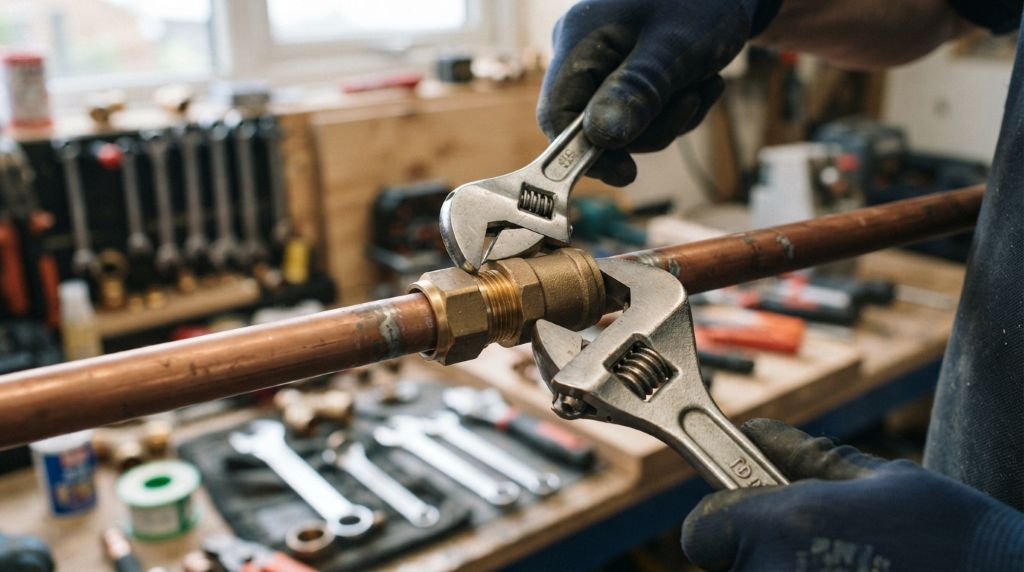
Compression fittings are one of the most popular and reliable ways to connect copper pipes without soldering. They work by using a brass or copper ring, called a ferrule, that compresses around the pipe when you tighten a nut. This creates a watertight seal without the need for heat. Compression fittings are widely used in both residential and commercial plumbing and are approved for many applications, including water supply lines.
To use a compression fitting, start by cutting the copper pipe to the desired length with a pipe cutter. Make sure the cut is clean and free of burrs. Next, slide the compression nut onto the pipe, followed by the ferrule (the brass ring). Insert the pipe into the fitting body until it stops. Then, hand-tighten the nut onto the fitting body. Finally, use a wrench to tighten the nut an additional 1/4 to 1/2 turn. Be careful not to overtighten, as this can damage the ferrule and cause leaks.
The biggest advantage of compression fittings is their reliability. When installed correctly, they create a strong, leak-proof joint that can last for years. They’re also reusable, which means you can take them apart and reassemble them if needed. This makes them ideal for temporary fixes or situations where you might need to modify the plumbing later. Additionally, compression fittings don’t require any special tools beyond a wrench and a pipe cutter, making them accessible for DIYers.
However, compression fittings do have some drawbacks. They can be bulkier than soldered joints, which might be an issue in tight spaces. Additionally, the fittings themselves can be more expensive than other no-solder options. Over time, the ferrule can also loosen, especially in high-vibration areas, so you may need to check and tighten them periodically.
I’ve used compression fittings for several projects, including repairing a leak under my bathroom sink and installing a new water line for my ice maker. They’ve held up well, and I appreciate the peace of mind that comes with knowing I can take them apart if needed. Therefore, if you’re looking for a no-solder method that’s both reliable and reusable, compression fittings are an excellent choice.
Push-Fit (SharkBite) Fittings: The Easiest DIY Solution
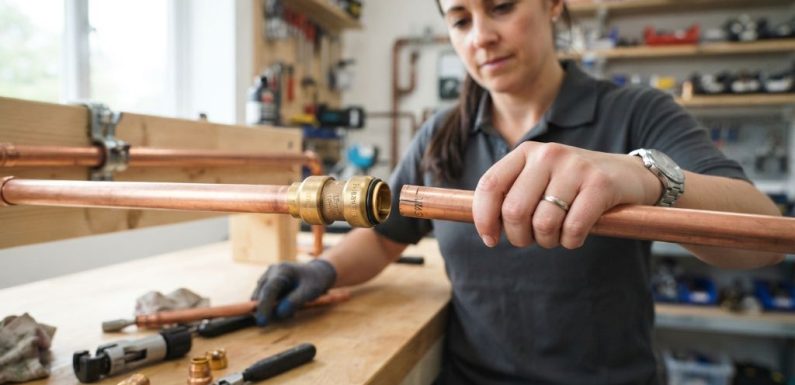
If you’re looking for the simplest way to connect copper pipes without soldering, push-fit fittings—commonly known by the brand name SharkBite—are the way to go. These fittings allow you to join copper pipes (as well as PEX and CPVC) with nothing more than a simple push. They’re designed for ease of use, making them a favorite among DIYers and professionals alike.
Push-fit fittings work by using a combination of O-rings and grip rings inside the fitting. When you push the pipe into the fitting, the grip rings lock onto the pipe, while the O-rings create a watertight seal. To use them, simply cut the pipe to the desired length, ensuring the end is clean and free of burrs. Then, push the pipe into the fitting until it clicks into place. That’s it—no tools, no heat, and no hassle.
The biggest advantage of push-fit fittings is their simplicity. They’re incredibly easy to install, even for beginners. You don’t need any special tools or skills, and the process takes just seconds. This makes them ideal for quick repairs or projects where you want to save time. Additionally, push-fit fittings are reusable. If you need to remove or adjust the pipe, you can simply pull it out of the fitting and reinsert it later.
Push-fit fittings are also versatile. They can be used for both water supply lines and drain lines, and they’re compatible with copper, PEX, and CPVC pipes. This makes them a great option for a wide range of plumbing projects. I used SharkBite fittings to install a new bathroom vanity, and the ease of use was a game-changer. I was able to complete the project in a fraction of the time it would have taken with soldering.
However, there are some downsides to consider. Push-fit fittings are more expensive than traditional soldered joints or compression fittings. Additionally, while they’re approved for many applications, some local plumbing codes may not allow them for permanent installations, especially for gas lines. Always check your local codes before using push-fit fittings for a permanent project.
Therefore, push-fit fittings are an excellent choice for DIYers who want a quick, easy, and reliable way to connect copper pipes without soldering. Just be sure to verify that they meet your local code requirements.
Flare Fittings: A Secure Alternative for Special Applications
Flare fittings are another reliable no-solder method for connecting copper pipes. They’re commonly used in refrigeration, air conditioning, and some gas applications, where a strong, leak-proof joint is critical. Flare fittings work by expanding the end of the copper pipe into a flare shape, which is then compressed against a fitting with a flare nut.
To use flare fittings, you’ll need a flaring tool. Start by cutting the copper pipe to the desired length and removing any burrs. Next, slide the flare nut onto the pipe, followed by the flare fitting. Use the flaring tool to expand the end of the pipe into a cone shape (the flare). Then, insert the flared end into the fitting and tighten the flare nut with a wrench. The flare creates a metal-to-metal seal that’s strong and reliable.
The biggest advantage of flare fittings is their strength. They create a secure, leak-proof joint that can withstand high pressure, making them ideal for applications like refrigeration lines. They’re also reusable, as you can disconnect and reconnect the fitting as needed. Additionally, flare fittings don’t require heat, which makes them a safer option in areas where an open flame is not allowed.
However, flare fittings do have some limitations. They require a flaring tool, which can be an additional expense if you don’t already own one. Additionally, creating a proper flare takes some practice. If the flare isn’t done correctly, the joint may leak. I’ve used flare fittings for a few HVAC projects, and while they’re reliable, they do require more skill and effort than push-fit or compression fittings.
Flare fittings are also not as commonly used for water supply lines in residential plumbing. They’re more specialized, so you might not find them in your local hardware store as easily as compression or push-fit fittings. Therefore, flare fittings are best for specific applications where their strength and reliability are necessary.
Other No-Solder Methods: Clamps, Epoxy, and More
While compression, push-fit, and flare fittings are the most common no-solder methods, there are a few other options worth considering for specific situations. These methods can be useful for temporary fixes, emergency repairs, or unique applications.
Pipe clamps, also known as repair clamps or slip couplings, are a quick and easy way to fix a leak in a copper pipe without soldering. They consist of a rubber gasket and a metal clamp that tightens around the pipe, sealing the leak. To use a pipe clamp, simply place the rubber gasket over the leak and position the clamp around it. Then, tighten the clamp with a wrench until the leak stops. Pipe clamps are ideal for emergency repairs, as they can stop a leak in minutes without any special tools or skills.
However, pipe clamps are not a permanent solution. They’re designed for temporary fixes until you can make a more permanent repair. Over time, the rubber gasket can degrade, and the clamp may loosen, leading to leaks. Additionally, pipe clamps can be bulky and may not fit in tight spaces. I’ve used a pipe clamp to stop a leak under my house while waiting for a plumber to arrive. It worked perfectly for the short term, but I wouldn’t rely on it for a permanent fix.
Epoxy putty is another option for repairing copper pipes without soldering. It’s a two-part adhesive that hardens to create a strong, waterproof seal. To use epoxy putty, clean the area around the leak, mix the two parts of the putty together, and apply it to the pipe. The putty will harden in a few minutes, sealing the leak. Epoxy putty is great for small leaks or cracks, but it’s not ideal for high-pressure systems or large breaks.
Threaded adapters can also be used to connect copper pipes without soldering. These adapters have male or female threads that allow you to screw them onto other threaded fittings or pipes. They’re commonly used to transition between different types of pipes, such as copper to PVC. However, threaded adapters require the use of pipe dope or Teflon tape to create a watertight seal, and they may not be as strong as other no-solder methods.
Therefore, while these other methods can be useful in specific situations, they’re generally not as reliable or long-lasting as compression, push-fit, or flare fittings. They’re best reserved for temporary fixes or emergency repairs.
Safety Considerations and Code Compliance
No matter which no-solder method you choose, safety and code compliance should always be your top priorities. Plumbing work that doesn’t meet local codes can be dangerous, lead to leaks, or even void your homeowner’s insurance. Therefore, it’s essential to understand when and where each method is appropriate, including how different fittings are used in plumbing systems. For a broader look at fitting options, you can also explore this guide to wye fittings and their versatile applications.
First, always check your local plumbing codes before starting any project. Some areas have strict rules about which types of fittings can be used for permanent installations, especially for water and gas lines. For example, push-fit fittings like SharkBite are approved for many water supply applications but may not be allowed for gas lines in some jurisdictions. Compression fittings are generally more widely accepted for permanent installations, but it’s still important to verify with your local building department.
Second, consider the application. No-solder methods are great for water supply lines, but they may not be suitable for all situations. For example, if you’re working with a high-pressure system or a gas line, soldering or flare fittings may be the only approved options. Additionally, some no-solder methods, like pipe clamps or epoxy putty, are only intended for temporary fixes and shouldn’t be used as permanent solutions.
Third, always pressure-test your connections after installation. Even the best no-solder methods can fail if not installed correctly. Turn on the water and check for leaks at each joint. If you see any drips or signs of moisture, tighten the fitting or reinstalled it as needed. For gas lines, use a soapy water solution to check for leaks—bubbles will form at any leak points. If you’re unsure about your work, it’s always a good idea to have a licensed plumber inspect it.
I learned the importance of pressure-testing the hard way. After installing a new water line with push-fit fittings, I didn’t check for leaks right away. A few days later, I noticed a small puddle under the sink. A quick pressure test revealed a loose fitting that I was able to tighten easily. Since then, I always pressure-test my work immediately after installation.
Finally, know your limits. While no-solder methods are great for DIYers, some projects are best left to the professionals. If you’re dealing with a major plumbing repair, a gas line, or a high-pressure system, it’s worth calling in a licensed plumber to ensure the work is done safely and correctly.
Therefore, always prioritize safety and compliance when choosing a no-solder method for connecting copper pipes.
Frequently Asked Questions
Are no-solder connections as strong as soldered joints?
No-solder connections can be just as strong as soldered joints when installed correctly. Compression fittings and flare fittings, in particular, create reliable, leak-proof joints that can last for years. However, the strength of the connection depends on the method used and the quality of the installation.
Can I use push-fit fittings for a permanent water line?
In many cases, yes. Push-fit fittings like SharkBite are approved for permanent water supply lines in most residential applications. However, always check your local plumbing codes to ensure they’re allowed in your area. Some jurisdictions may have restrictions on their use for permanent installations.
Do I need any special tools for these methods?
The tools you need depend on the method you choose. Compression fittings require a wrench and a pipe cutter. Push-fit fittings need no tools at all. Flare fittings require a flaring tool. Pipe clamps and epoxy putty don’t require special tools, but a wrench can be helpful for tightening clamps.
Are there any no-solder methods that work for gas lines?
Flare fittings are commonly used for gas lines in many applications, such as refrigeration and HVAC systems. However, local codes vary, and some areas may not allow no-solder methods for gas lines. Always check with your local building department and consult a licensed professional for gas line work.
How do I know if my no-solder connection is leaking?
After installing a no-solder connection, turn on the water and inspect the joint for any signs of moisture or drips. For gas lines, use a soapy water solution to check for bubbles, which indicate a leak. If you notice any leaks, tighten the fitting or reinstalled it as needed. If the leak persists, the fitting may need to be replaced.
Conclusion
Connecting copper pipes without soldering is not only possible but often practical and efficient. Whether you choose compression fittings for their reliability, push-fit fittings for their ease of use, or flare fittings for their strength, there’s a no-solder method that will work for your project. Each option has its own advantages and considerations, so the best choice depends on your specific needs, skills, and local codes.
From my own experience, no-solder methods have saved me time, stress, and even potential hazards. Compression fittings gave me the reliability I needed for permanent installations, while push-fit fittings made quick repairs a breeze. Flare fittings proved their worth in specialized applications, and pipe clamps came to the rescue in emergencies. No matter the project, there’s a no-solder solution that can get the job done safely and effectively.
If you’re new to plumbing or just looking for a simpler way to connect copper pipes, give one of these methods a try. Start with the easiest option, like push-fit fittings, and work your way up to more advanced techniques as you gain confidence. And remember, safety and code compliance should always come first.
Have you tried any of these no-solder methods for connecting copper pipes? Share your experiences or questions in the comments below—we’d love to hear from you! And if you found this guide helpful, don’t forget to share it with others who might be tackling a plumbing project. Here’s to successful, leak-free connections!
