

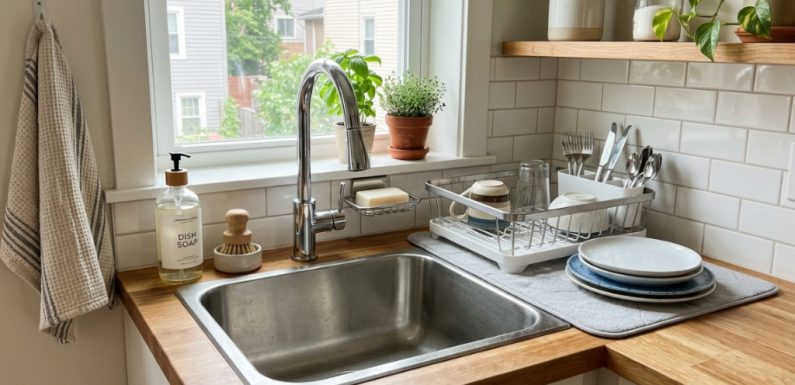
You love cooking, but your tiny kitchen feels more like a closet than a culinary studio. By the time you finish a meal, the sink is stacked with plates, and the counter is nowhere to be found. If you live in a studio, RV, or small apartment, cleaning dishes by hand feels like a never-ending chore that steals your precious time and space. The problem isn’t your dishes—it’s your setup. You need a solution that fits your square footage without sacrificing convenience. This guide will show you exactly how to clean dishes in small spaces, from smart hand-washing techniques to space-saving appliances that do the hard work for you
Why Is Cleaning Dishes Harder in a Small Kitchen?
Washing dishes in a cramped space presents unique challenges that go beyond simple inconvenience. The lack of counter space, limited drying areas, and restricted movement make an easy task feel overwhelming. Understanding these obstacles is the first step toward solving them.
Limited Counter and Sink Space
In a small kitchen, every inch of counter space is precious. You likely have just enough room for a cutting board and a coffee maker. When it’s time to wash dishes, you have nowhere to set the dirty rack or the clean, wet plates. This forces you to juggle items in the sink, leading to chipped edges and frustration.
Inadequate Drying Areas
Standard dish racks take up valuable real estate. If you don’t have a dedicated spot for drying, you end up stacking wet dishes on towels or leaving them in the sink. This creates a breeding ground for bacteria and makes your kitchen feel cluttered and damp.
Storage Constraints for Supplies
You need sponges, brushes, soap, and drying mats, but there’s no place to keep them organized. Supplies end up on the counter, creating visual clutter. When you can’t find your scrub brush quickly, the chore takes even longer.
What Are the Best Hand-Washing Techniques for Tiny Kitchens?
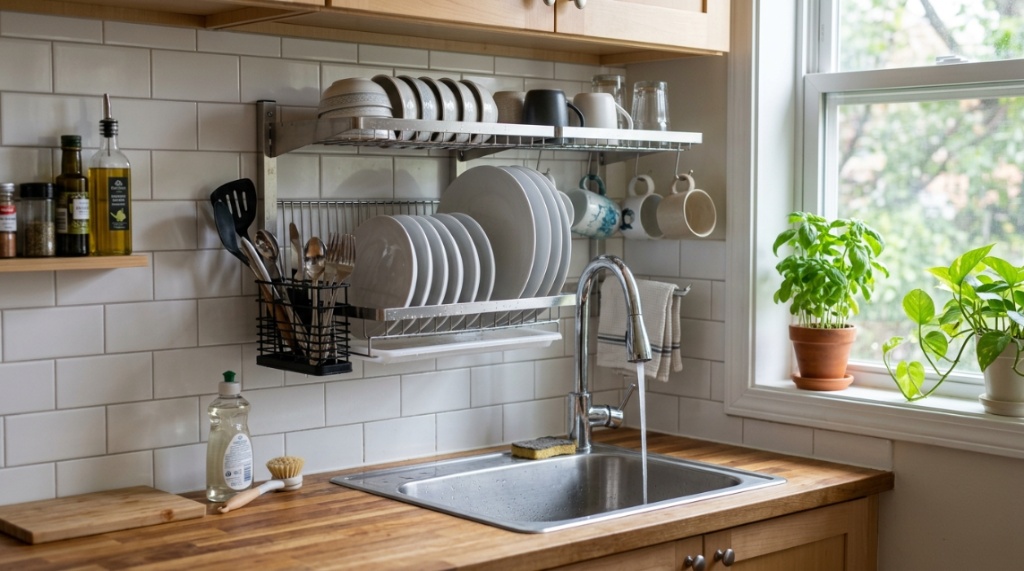
Even if you plan to get an appliance, knowing how to wash efficiently by hand is a survival skill in small spaces. The goal is to minimize mess, reduce water usage, and keep your counters clear.
The “One-Item-At-A-Time” Method
Instead of piling everything in the sink, wash, rinse, and dry each item immediately. Start with the least greasy items (glasses and cups) and work your way to pots and pans. This prevents water from getting dirty too fast and keeps your work area organized. Dry each piece and put it away before moving to the next.
Vertical Drying Solutions
Use a dish rack that sits over the sink or a foldable drying mat that rolls up when not in use. Over-the-sink racks are a game-changer because they utilize dead air space. You can also use a tension rod inside a cabinet to hang drying utensils or lightweight cups.
Smart Soap and Tool Storage
Attach a magnetic soap dispenser to your fridge or a suction cup caddy to the tile wall near the sink. Keep only one high-quality sponge and a bamboo brush on the counter. Everything else goes in a drawer or cabinet. This keeps your workspace clean and your tools within reach.
How Can a Countertop Dishwasher Transform Your Routine?
If you live in a small space, a full-size dishwasher is usually out of the question. But a countertop dishwasher for small spaces offers a brilliant middle ground. It sits on your counter, connects to your faucet, and handles the dirty work while you reclaim your evenings.
Space-Saving Design
Countertop dishwashers are compact. They typically measure about 18 inches wide, 18 inches deep, and 18 inches tall. They fit neatly next to a microwave or under a cabinet. When you’re not using them, they double as extra counter space. Models with a flat top are perfect for holding your coffee maker or toaster.
Easy Installation and Setup
You don’t need a plumber. Most countertop dishwashers connect directly to your kitchen faucet with a simple adapter. You just screw the adapter onto the faucet, attach the hose, and plug it into a standard outlet. If you have a pull-out sprayer or a threaded faucet, installation takes less than 10 minutes.
Energy and Water Efficiency
Countertop dishwashers use significantly less water than hand washing. A full cycle uses about 2 to 3 gallons of water, compared to the 8 to 10 gallons you might use washing the same load by hand. They also heat water internally, so you don’t have to run your water heater as long. This saves on your utility bill and is better for the environment.
Cycle Options for Every Load
Modern units come with multiple wash cycles, including heavy, normal, quick, and rinse-only. The quick cycle is perfect for lightly soiled dishes and takes just 30 minutes. This means you can run a load while you eat breakfast or get ready for work.
Which Countertop Dishwasher Features Matter Most?
Not all compact dishwashers are created equal. To get the best results in a small space, you need to focus on specific features that maximize performance and convenience. Once you master how to clean dishes in small spaces, investing in mini appliances that make life easier, such as a compact countertop dishwasher, can completely transform your kitchen routine.
Capacity and Rack Design
Look for a model that holds at least six place settings. Check the rack design: does it have fold-down tines for larger pots? Can it fit a dinner plate upright? Some models have a removable silverware basket that frees up space for taller items. A flexible interior layout is key to getting the most out of a small appliance.
Drying Performance
Drying is where many countertop dishwashers fall short. Look for models with a heated dry cycle or a fan-assisted dry. Some units use condensation drying, which is quieter but slower. If you want dry dishes right away, prioritize a unit with a dedicated drying fan. This prevents water spots and the need to hand-dry after the cycle finishes.
Noise Level
In a small apartment, a noisy dishwasher is a big problem. Check the decibel rating. Anything under 50 dB is quiet enough to run while watching TV or sleeping. Many countertop models are surprisingly quiet because the motor is small and well-insulated.
Ease of Cleaning
You’ll need to clean the dishwasher itself occasionally. Look for a model with a removable filter that you can rinse under the tap. Some units have a self-cleaning cycle that helps prevent food buildup and odors. A smooth interior finish also makes wiping down easier.
How Do You Organize a Small Kitchen Around a Dishwasher?
Adding a countertop appliance requires a bit of reorganization. The goal is to create a workflow that makes loading and unloading effortless without cluttering your space.
Create a Dedicated Washing Zone
Designate one corner of your counter as the dishwashing station. Place the dishwasher there permanently, or store it in a cabinet and pull it out when needed. If you choose the latter, leave the hose connected so setup is as simple as sliding it out. Keep your drying rack, soap, and scrub brushes nearby.
Use a Rolling Cart for Flexibility
If counter space is extremely tight, place your countertop dishwasher on a small, sturdy rolling cart. You can wheel it next to the sink when you need it and push it against a wall or into a closet when you don’t. This gives you the benefit of the appliance without sacrificing permanent counter space.
Pre-Rinse Smartly in the Sink
Scrape food scraps into a small compost bin or trash caddy attached to the cabinet door. Give dishes a quick rinse under the tap before loading them into the dishwasher. This keeps the dishwasher clean and prevents odors. A sprayer attachment on your faucet makes this step fast and mess-free.
What Are the Best Practices for Daily Dishwashing in Small Spaces?
Developing a routine is the secret to keeping your small kitchen manageable. Consistency prevents the sink from overflowing and keeps your space feeling fresh.
Wash as You Cook
Don’t wait until after the meal. While your pasta boils or your sauce simmers, wash the cutting board, knife, and measuring cups you just used. Rinse them and place them directly in the dishwasher or drying rack. This spreads the workload across the entire cooking session and keeps your counter clear.
Run the dishwasher before it overflows.
Don’t wait until the dishwasher is completely full. In a small space, running it half-full is often more efficient than letting dirty dishes pile up on the counter. Use the quick cycle for smaller loads. This keeps your kitchen smelling clean and prevents pests.
Wipe Down the Sink Daily
After the last dish is done, give your sink a quick wipe with a sponge and all-purpose cleaner. Dry the faucet and the area around the dishwasher. This five-minute habit prevents hard water stains, soap scum, and odors. A clean sink makes the entire kitchen feel larger and more inviting.
How Do You Handle Large Items Like Pots and Baking Sheets?
Large cookware is the enemy of small-space dishwashing. You can’t fit a stockpot or a roasting pan in a countertop dishwasher. But you can still manage them efficiently without creating a mess.
Soak and Scrub Strategically
Fill your sink with hot, soapy water and soak large items immediately after use. While they soak, wash smaller items in the dishwasher. After the dishwasher cycle finishes, scrub the large items by hand. The soaking loosens stuck-on food, so cleaning takes just a minute or two.
Use Foldable or Stackable Cookware
Invest in nesting pots and pans that store inside each other. Silicone baking sheets and collapsible colanders also save space. When you choose cookware that stacks neatly, it’s easier to wash by hand and store away. This reduces the number of oversized items you need to manage.
Dry Large Items Outside the Sink
Use a foldable drying rack that extends over the sink. Lay your wet pot or baking sheet flat on the rack. Alternatively, dry them immediately with a clean kitchen towel and put them away. Never leave large items sitting in the sink or on the counter, as they block your workspace.
Can You Live Without a Dishwasher in a Tiny Space?
Yes, many people do. It’s entirely possible to keep a clean kitchen without any machine. The key is adopting habits that keep the chore quick and hygienic.
The Paper Towel Trick for Greasy Pans
Before washing a greasy pan, wipe it out with a paper towel. This removes the bulk of the oil and prevents your sponge from getting slimy. It also keeps your sink drain clear of grease buildup. Dispose of the paper towel in the trash, not the sink.
Use a Dedicated “Scrub Tub”
Fill a plastic washbasin with hot soapy water for washing. Use a second basin for rinsing. Wash all your items in the soapy basin, then dip them in the rinse basin. Stack clean dishes in a third basin or a drying rack. This method uses less water and keeps your sink free of dirty water.
Enlist a Daily Timer
Set a timer for 10 minutes after every meal. Spend exactly 10 minutes washing, drying, and putting away all dishes. This creates a habit and prevents the chore from dragging on. You’ll be amazed at how much you can accomplish in a focused 10-minute window.
What Mistakes Do People Make When Washing Dishes in Small Spaces?
Common errors turn an easy task into a daily struggle. Recognizing these mistakes helps you avoid them and keeps your routine smooth.
Letting Dishes Pile Up
The biggest mistake is waiting until the sink is full. Dirty dishes attract fruit flies, create odors, and make the kitchen feel chaotic. Wash or load them as soon as you finish eating. A few minutes of work now saves you 20 minutes of scrubbing later.
Using Too Much Soap
More soap does not mean cleaner dishes. Excess soap leaves a film on your plates and creates a mountain of suds that takes forever to rinse. Use a drop of concentrated soap, or fill a soap dispenser with diluted dish soap for better control.
Neglecting the Sink Strainer
Food particles clog your drain and cause bad smells. Empty the sink strainer after every wash session. Rinse it out, and toss the debris in the trash or compost. This small habit prevents plumbing issues and keeps your sink area fresh.
Frequently Asked Questions
Can I use a countertop dishwasher in an apartment with no hookups?
Yes. Countertop dishwashers connect to your kitchen faucet using an adapter. You do not need permanent plumbing or electrical hookups. They plug into a standard wall outlet and use the existing faucet for water supply and drainage.
How many dishes does a countertop dishwasher hold?
Most models hold about six place settings. This includes plates, bowls, cups, and silverware for two to three people. Some models also accommodate small pots, glasses, and mugs. Check the interior dimensions and rack layout to ensure it fits your typical load.
Is it safe to leave a countertop dishwasher running while I sleep?
Yes, most modern countertop dishwashers are UL-listed and have safety features like auto shut-off and leak protection. Choose a model with a quiet cycle (under 50 dB) so it does not disturb your rest. Always follow the manufacturer’s safety guidelines.
Do countertop dishwashers use a lot of electricity?
No. Countertop dishwashers are very energy-efficient. They use about 0.5 to 1.0 kWh per cycle, which is comparable to a small space heater running for an hour. The water heating element uses the most power, but the short cycles minimize overall consumption.
How do I clean a countertop dishwasher?
Remove and rinse the filter under warm water after every few cycles. Wipe the interior with a damp cloth to remove food residue. Run an empty cycle with a cup of white vinegar once a month to descale and deodorize. Avoid using bleach or harsh chemicals.
Can I wash cast iron or wooden utensils in a countertop dishwasher?
No. Cast iron pans and wooden cutting boards should be washed by hand. The high heat and moisture in a dishwasher can strip the seasoning from cast iron and cause wood to crack, warp, or split. Hand wash these items and dry them immediately.
Will a countertop dishwasher fit under my cabinet?
Measure the height of your countertop opening. Most countertop dishwashers are 17 to 18 inches tall. If you have a standard 18-inch gap between the counter and the bottom of the upper cabinet, you should have a few inches of clearance. Always check the spec sheet for exact dimensions.
Conclusion
Cleaning dishes in a small space doesn’t have to be a daily battle. Whether you choose to hand wash with a smart system or invest in a compact appliance, the key is creating a routine that respects your limited square footage. Focus on washing as you go, using over-the-sink drying solutions, and keeping your supplies organized within arm’s reach. If you’re ready to upgrade your routine, a countertop dishwasher offers the most significant time savings. It frees you from the sink, uses less water, and leaves your counters clear. Start by assessing your current workflow, pick one new habit to implement today, and watch your small kitchen become a more enjoyable place to cook and clean.
